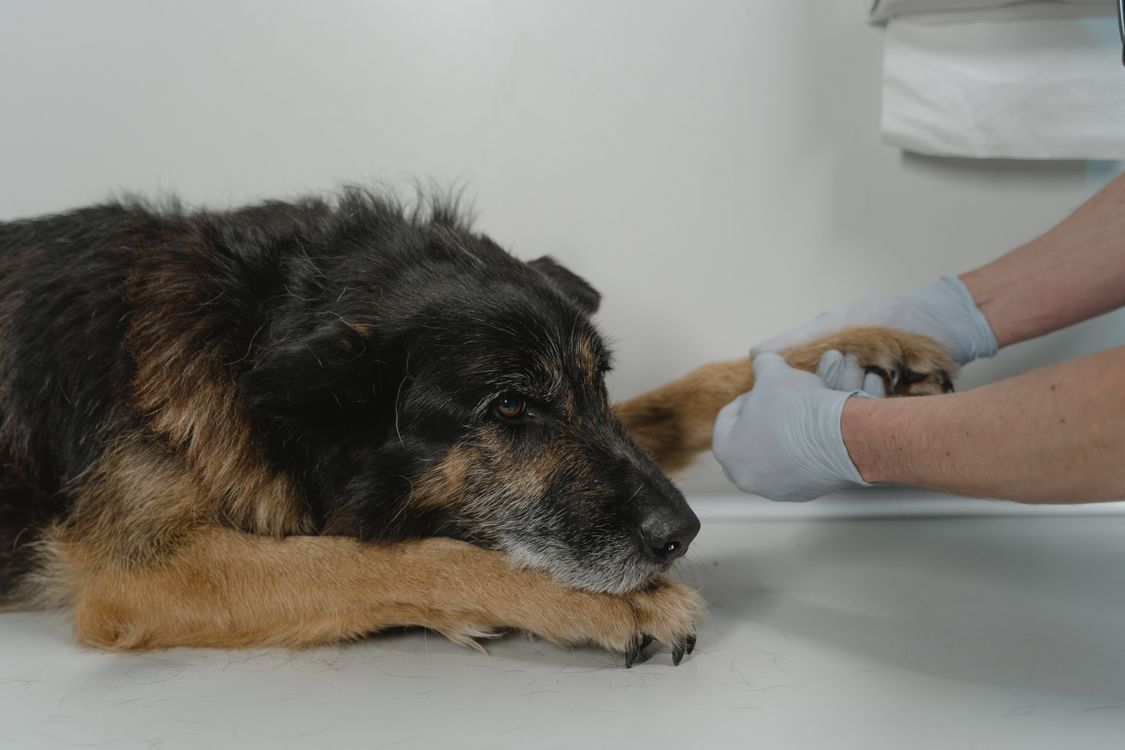
A back paw that scuffs the sidewalk. A toe that curls under on the kitchen floor. Most owners file that under arthritis, or old age, and stop worrying about it. A new study from Cornell suggests about a quarter of dogs have a measurable delay in the reflex that keeps paws where they belong, including dogs whose owners never mentioned a problem.
What the vets tested
Researchers at Cornell University Hospital for Animals ran the exam on 323 client-owned dogs between May and July 2025. None had been brought in for a neurological complaint, and 277 met the study criteria. The check used two standard tests: hopping each limb sideways while the dog’s weight shifts onto it, and flipping a paw over to see how quickly the dog puts it right.
Both measure proprioception, the sense of where a limb sits without looking at it. Dogs were scored normal, mildly affected, or severely affected. Dogs on gabapentin or trazodone, dogs with previous orthopedic surgery or orthopedic disease other than arthritis, and dogs with cranial nerve abnormalities were left out of the count.
One in four, and mostly in the back legs
Seventy-two of the 277 dogs, or 26%, had a delayed postural reaction in at least one limb. That was more than the authors expected, and the pattern was lopsided. Ninety percent of the affected dogs had deficits only in the hind limbs. Fifteen had a problem in a single limb, and fourteen of those were a back leg.
Spinal reflexes stayed normal in every dog with a deficit, and only one had increased muscle tone. The delay did not look like it was coming from an obvious spinal injury.

The study was published in the Journal of Veterinary Internal Medicine in October and is free to read in full.
Age did most of the work
Dogs with deficits were older. Median fractional lifespan was 0.82, against 0.54 for the dogs with normal reactions. Fractional lifespan is age divided by the lifespan expected for a dog of that size, so a Labrador with a 12-year horizon at 0.82 is roughly 10 years old.
More than 40% of dogs past 0.75 had deficits, and the gap opened up much earlier, close to the halfway mark of expected lifespan. For many medium and large dogs that is around six or seven years old. Sex, neuter status and short-legged build did not hold up once age was accounted for, which went against the authors’ initial guess that chondrodystrophic breeds would fare worse.
Why the hind end goes first
The authors point at anatomy. The pelvic limbs sit at the end of longer spinal tracts and longer peripheral nerves, and the lower back is where degenerative myelopathy, lumbosacral disease and disc problems tend to land. They also raise aging receptors in joints and tendons, and slower integration in the brain, as a second explanation. Neither idea is settled.
What this means for your dog
The useful part is the ask. Postural reaction testing is part of a standard neurological exam and takes a minute or two on the exam table, with no sedation and no imaging. If your dog is middle-aged or older, it is reasonable to request a hopping and paw placement check at the next wellness visit, especially if you have noticed scuffing, knuckling, or a dog who hesitates on stairs.
What the finding does not mean is that your dog has a disease. A delayed paw response is a sign, not a diagnosis. This was one snapshot in time, so nobody can say from this study whether a particular dog’s deficit will hold steady, worsen, or clear up.
The authors are careful about both directions of error. Treating an incidental finding as active neurological disease sends owners toward scans they may not need. Writing every delay off as normal aging can bury the first sign of something progressive. A deficit that is one-sided, getting worse, or paired with weakness, dragging or accidents in the house deserves a proper workup. If your dog has been limping rather than scuffing, the newer three-month arthritis injection is a separate conversation with your vet.

For the wider picture on looking after an aging dog, the site’s Dog Health 101 hub covers the basics, and senior dog winter care has the seasonal checklist.
What the study can’t tell you
It ran at one teaching hospital, over one summer, on dogs well enough to walk in the door. Owners who bring a dog to Cornell are not a random sample of the country’s dogs. There was no follow-up either, and the authors say longitudinal work is the next step to learn what happens to a dog with an incidental finding.
None of this is a reason to panic about your nine-year-old’s back legs. It is a reason to have them checked properly, and to know what your vet is checking for.