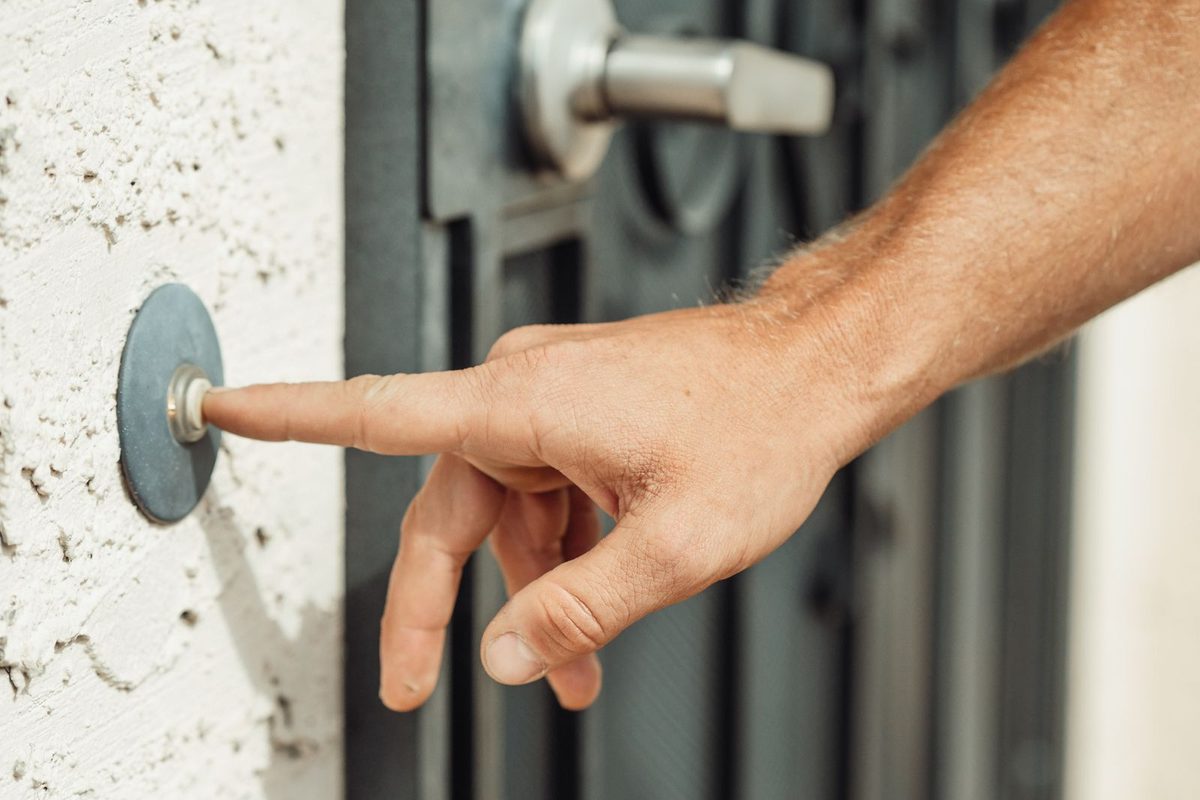
The knock lands and your dog is already at the door, barking hard enough to rattle the hinges. You open it six inches, apologize to the driver, and hold the collar with one hand while the package gets set on the step.
Doorbell barking is not disobedience. The bell is a prediction: someone is about to walk into his territory. Barking at that person has also been working, because the stranger always leaves.
A louder “quiet” will not fix it. What changes the behavior is teaching the dog that the bell predicts something better than a fight, then giving him a job he cannot do while barking.
Why the doorbell hits so hard
A doorbell is two problems in one sound. It is sudden and sharp, so it trips a startle response in many dogs, and it means a stranger is at the threshold. Territory plus surprise is about as arousing as a dog’s day gets.
Every time the dog explodes and the visitor goes away, the routine gets practiced again, which is why shouting makes it worse. You add arousal to a dog who is already over threshold, and he learns the bell comes with yelling too.
Step 1: Take the door out of the equation
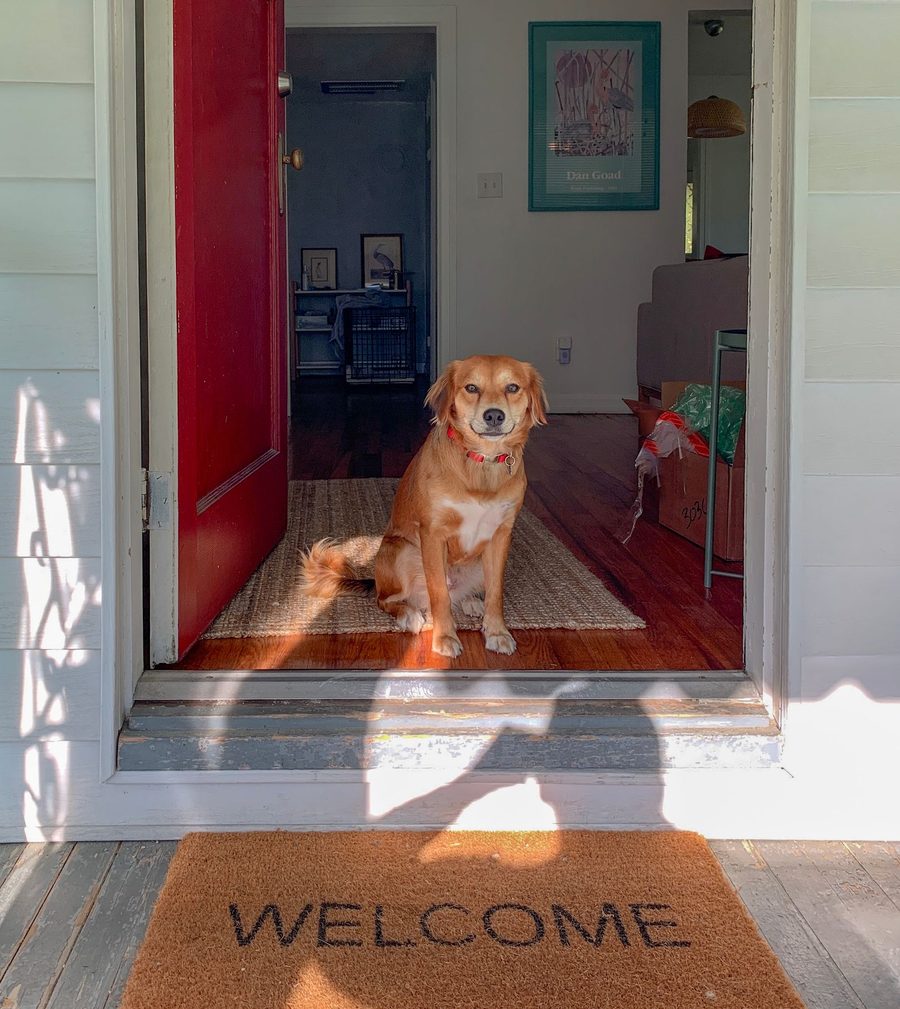
For the next few weeks, do not let your dog practice the old routine. Put him on a leash, use a baby gate, or send him to another room behind a closed door while you take the delivery.
It is management, and most people skip it. A dog who rehearses the exploding version five times a week undoes a month of training. Ask couriers to leave packages without knocking when the app allows it, and keep treats by the front door. In an apartment, use the leash every single time.
Step 2: Change what the bell predicts
Start with the sound and no door involved. The AKC’s guide to doorbell barking takes the same route. Record the doorbell or a knock on your phone, or have someone outside press it while you work inside.
Use food the dog really wants, not kibble. Bell at low volume, then a treat the moment the dog notices. Five to ten repetitions, two or three minutes, then stop.
Once he turns toward you when the bell plays, move the treat ahead of the sound so the bell becomes the announcement that food is coming. Raise the volume only while he is still eating and still loose. If he stops eating or backs away, it was too high.
Zak George makes the same point in a recent video about knocking: build the response to the sound before you ask for it at a real door.
Step 3: Teach a place, with the door closed
A mat, bed, or crate away from the front door is the job. Teach it with no bell and no visitors, before you add anything hard.
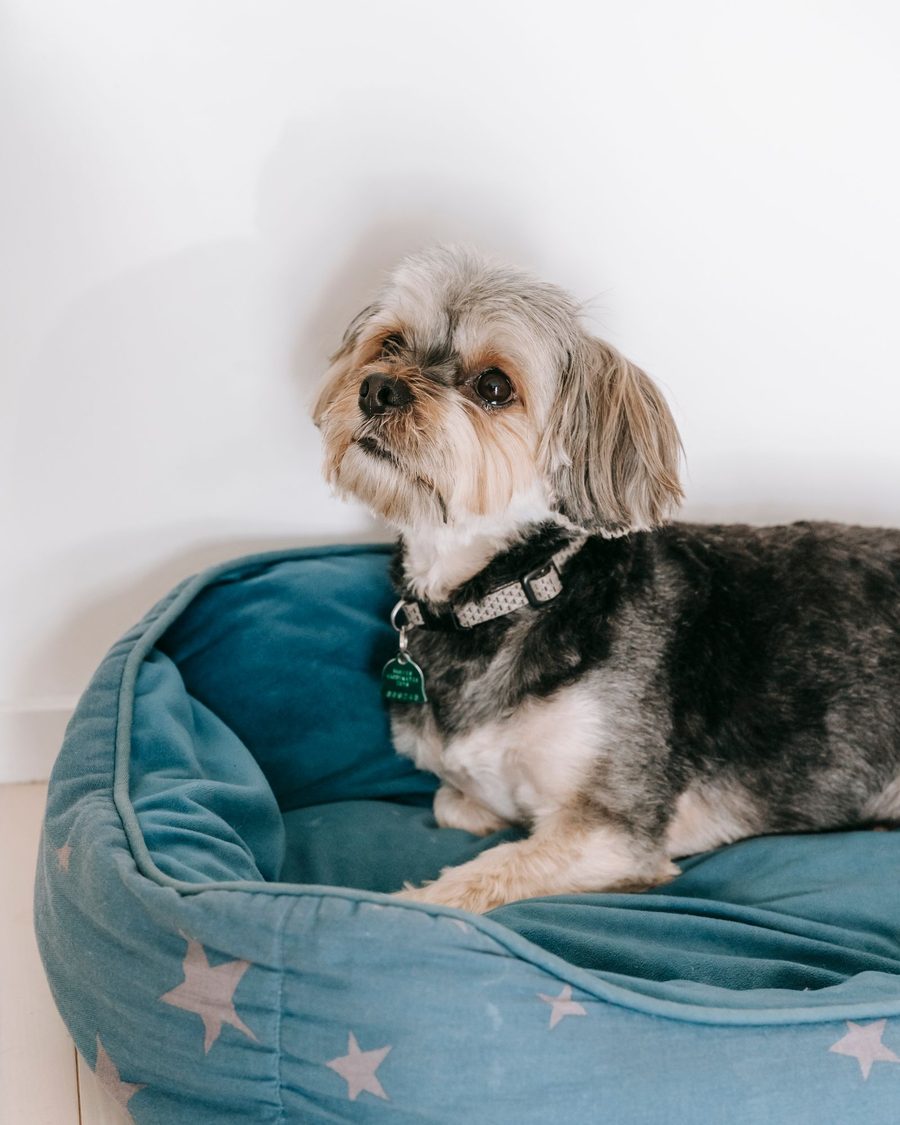
Lure the dog onto the mat and pay as soon as all four paws are down. Repeat until he heads there on his own when you point. Add a cue, “place,” then pay for time the way you would teach a stay: two seconds, five, ten. Build distance a pace at a time. End with a release word so he knows the job is over.
Short sessions, several a day.
Step 4: Put the bell and the place together
Now the bell means run to the mat.
Play the bell at low volume and toss a treat onto the mat. Pay him there, not at the door. Repeat until he trots to the mat as soon as the sound plays. Then raise the volume, then have a helper knock outside, then ring the real bell.
Then the door actually opens. Have a friend stand outside while you open it, hand over an empty box, and close it, paying the dog on the mat the whole time.
What usually goes wrong
The most common mistake is skipping the dull part. People run the real doorbell on day one, the dog explodes, and the training gets blamed. The sound work has to be easy before the door opens.
Then there is timing. Paying him after the outburst ends teaches the wrong half of the sequence. Mark the moment he is quiet and on the mat, not the moment he finally stops barking.
Watch for fear, not excitement. A dog who barks and backs away, tucks his tail, or will not come near the door is scared, not overexcited. One quick test: put a piece of cheese a few feet from the door and see whether he takes it. A dog who will eat can still learn. A dog who will not is over threshold, and pushing will not help.
Most dogs get there in two to four weeks of short sessions. Dogs with years of rehearsal, or real noise sensitivity, take longer.
Get help from a certified force-free trainer or veterinary behaviorist if the dog cannot eat near the door, stays agitated for half an hour afterward, has snapped at a visitor, or has hurt himself there. Bark collars, citronella or shock, are not a shortcut. They suppress the noise and leave the fear where it was.
Success here looks like a dog who hears the bell, looks at you, and walks to his mat because that is where the good stuff happens.