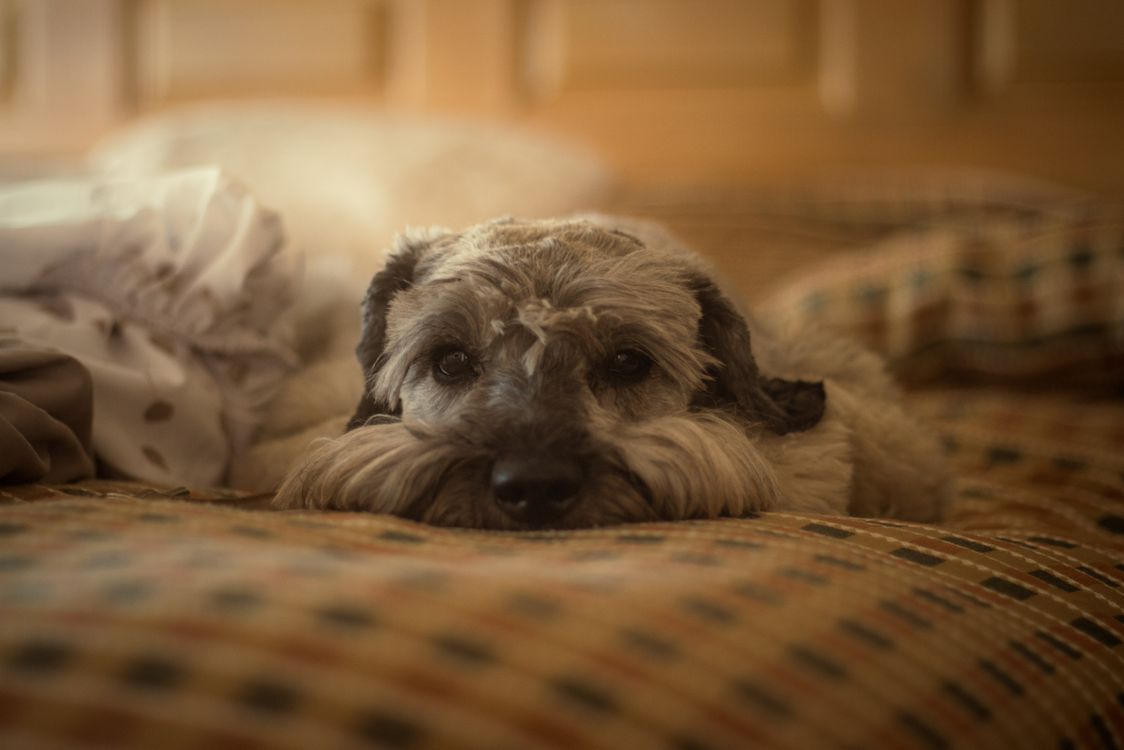
The first properly cold morning of the year, your old dog stands up in stages. Front legs first, a pause, then the back end catches up. Then he looks at the back step like it owes him money.
Nothing is broken. He is stiff, the way anyone is stiff when the floor is cold and yesterday’s long walk is still sitting in his hips. Cold weather does not cause arthritis, but it does make a creaky dog move like a much older one.
Shorter walks beat heroic ones
In July, a long loop feels like a gift. In November, it is a debt he pays for two days.
Vetstreet’s guide to exercising a dog with arthritis makes the point plainly: there is no universal distance, and more exercise is not automatically better. What helps is a regular, low impact routine agreed with your vet, on ground the dog can manage. For most old dogs that means the same short loop, at roughly the same time, on flat footing, with sniffing time built in.
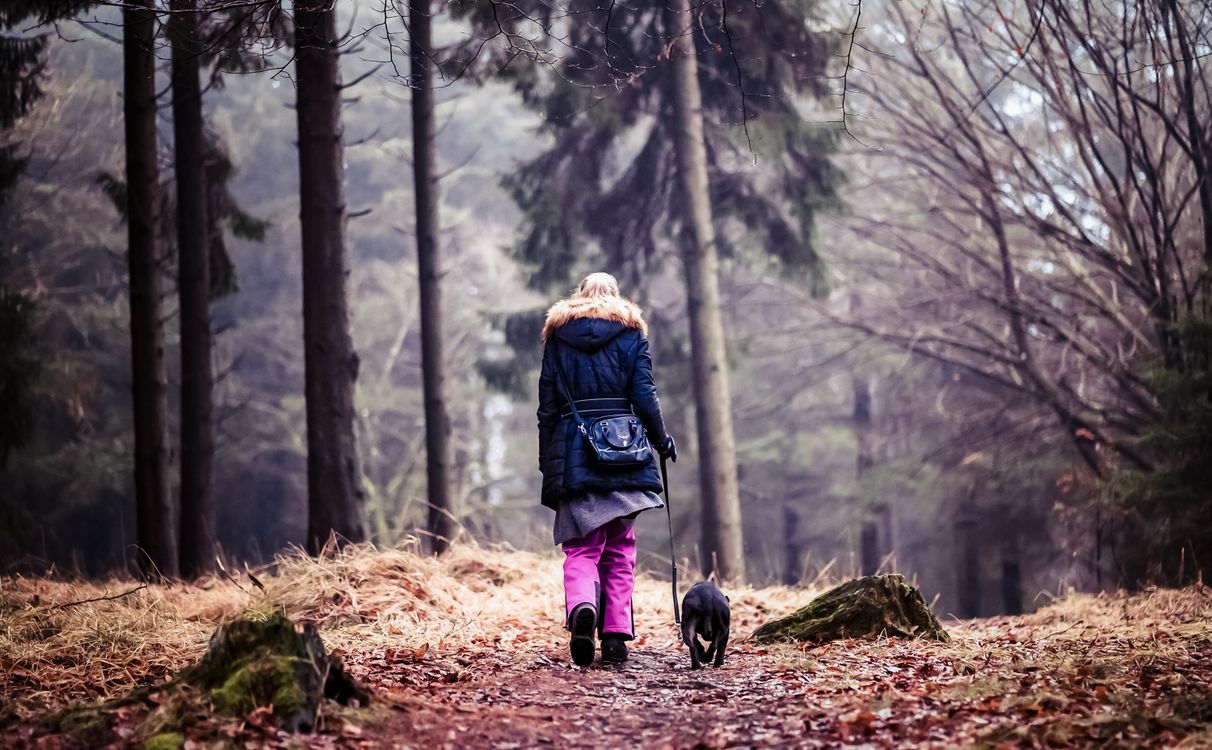
Sniffing is the bit that is easy to skip. Fifteen minutes of slow, nose-down wandering often does more for a stiff dog than forty-five minutes of marching, because it keeps him at a pace his joints can follow. Flat routes beat scenic ones, too. A trail with a fallen log and three stone steps is a puzzle for a dog with bad hips, while the loop around the block is dull to you and fine for him.
Watch how he gets up, not how far he goes
The distance on your watch is not the useful number. Vetstreet suggests a simple record instead: how he gets up before the walk, any change of pace or stopping during it, and how he moves after rest, later that day or the next morning.
Keep that note somewhere you will look. Two weeks of it gives your vet more than “he seems slower lately,” and costs about thirty seconds a day. Agree on who is recording, too: it is easy for two people to walk the same sore dog, each assuming the other one didn’t.
Warmth where he actually sleeps
Older dogs carry less muscle and less padding, so a cold floor hits harder. Move his bed off tile and out of the draft line under the door. If he has started choosing the sofa over his own bed, that is information: the sofa is warmer and softer.
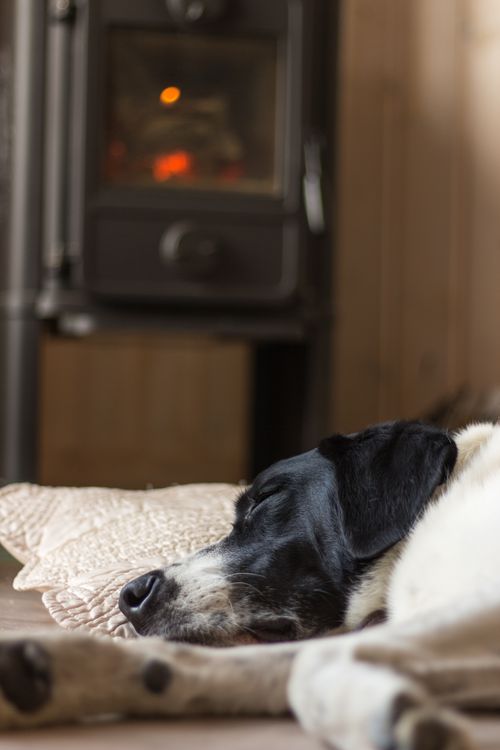
Layers he can shift work better than heat he cannot escape. A raised bed with a couple of blankets lets him burrow or kick one off. An electric pad left running under a sleeping dog is a different risk, since a heavy dog may not shift away from something that has become too warm. If you are set on a heated bed, our checklist for heated dog beds covers what to look for.
Traction around the house
Old dogs slip, and slipping turns stiffness into a wrenched back. Runner rugs along his usual route help more than you would expect: bed to water bowl, water bowl to the back door.
Trim the fur between his pads so they make contact, and keep the nails short enough that the paw sits flat. If he slides across the kitchen floor, no boot will fix it. Boots earn their place once the salt goes down, so bag them for the pavement rather than the hallway.
Make the couch and the car reachable
If he hesitates at the couch, he is not being stubborn. He has done the maths and decided the jump is not worth it. A carpeted step or a low ramp gets him back on the sofa beside you, which for most old dogs is the whole point of winter.
For the car, a support harness with a handle over the shoulders saves your back and his, and lifting with one arm under the chest and one under the hips spreads the load better than grabbing front legs. Practise on a calm day, not in a rainy car park at the vet.
A five-step cold morning routine
- Open the door and let him set the pace off the step.
- Take the short flat loop, ten to fifteen minutes, with sniffing allowed.
- Check his paws when you get in: salt, ice balls between the pads, any small cut.
- Towel the belly and send him to a warm, dry spot rather than a cold floor.
- Add two lines to the note: how he got up, how he walked.
That is the whole routine. It takes less time than scrolling your phone in bed.
When to call the vet
Stiffness that arrives suddenly is not weather. Neither is a dog who will not put a paw down, a limp that does not ease after rest, pacing at night, or a dog who stops wanting to go out. Worth a phone call the same week.
And if you are reaching for a leftover pain tablet from last winter, check with your vet first. Doses get adjusted and other medications get added. The American College of Veterinary Surgeons treats controlled activity, weight management and pain control as one plan rather than three separate guesses.
New boots for the salt? Our guide to getting your dog ready before the first freeze covers fit and sizing. And if the early dark is cutting walks short, here is what changes on walks after dark.
An old dog who still wants to sniff the same three bushes every morning is doing better than most. Keep him going out, at his pace, and let him set the distance.