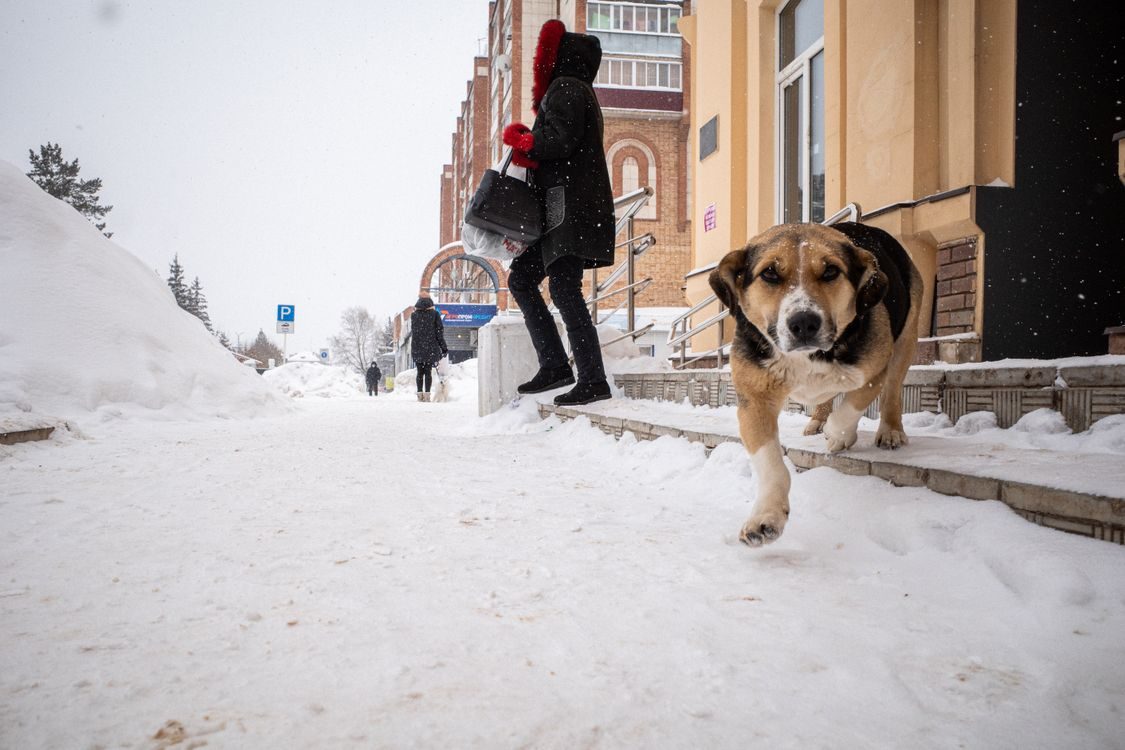
The first cold morning that catches you out usually looks the same. The dog hits a salted sidewalk at a trot, takes three steps, and comes up on one leg. You check the paw expecting blood and find nothing, just a dog who suddenly wants to go home. The boots arrive two weeks later, after the ice has already taught the lesson.
Most of the country gets its first hard freeze somewhere between late October and mid-November. Which leaves a window right now for the boring part: getting a dog used to wearing something on their feet while the ground is still soft.
What rock salt actually does to a paw
The two de-icers on most driveways and city sidewalks are calcium chloride and sodium chloride. Both are rough on pads, and the bigger trouble comes after the walk. Dogs lick their feet, so whatever they stepped in ends up in their mouth. That is why the AKC’s guide to pet-safe ice melt treats the choice of de-icer as a health question rather than a shopping one.
Ice does its own damage. Crusted snow and jagged ice cut pads that went soft during a mild fall, and cold air outside plus dry heat inside cracks them further. Snow also balls up between the toes, badly on dogs with feathery feet. Those ice balls hurt and they pull hair out when the dog chews them loose. The AKC’s advice is not to yank them. Soak a towel in warm water, press it against the pad, and let the ice melt.
Fit matters more than the feature list
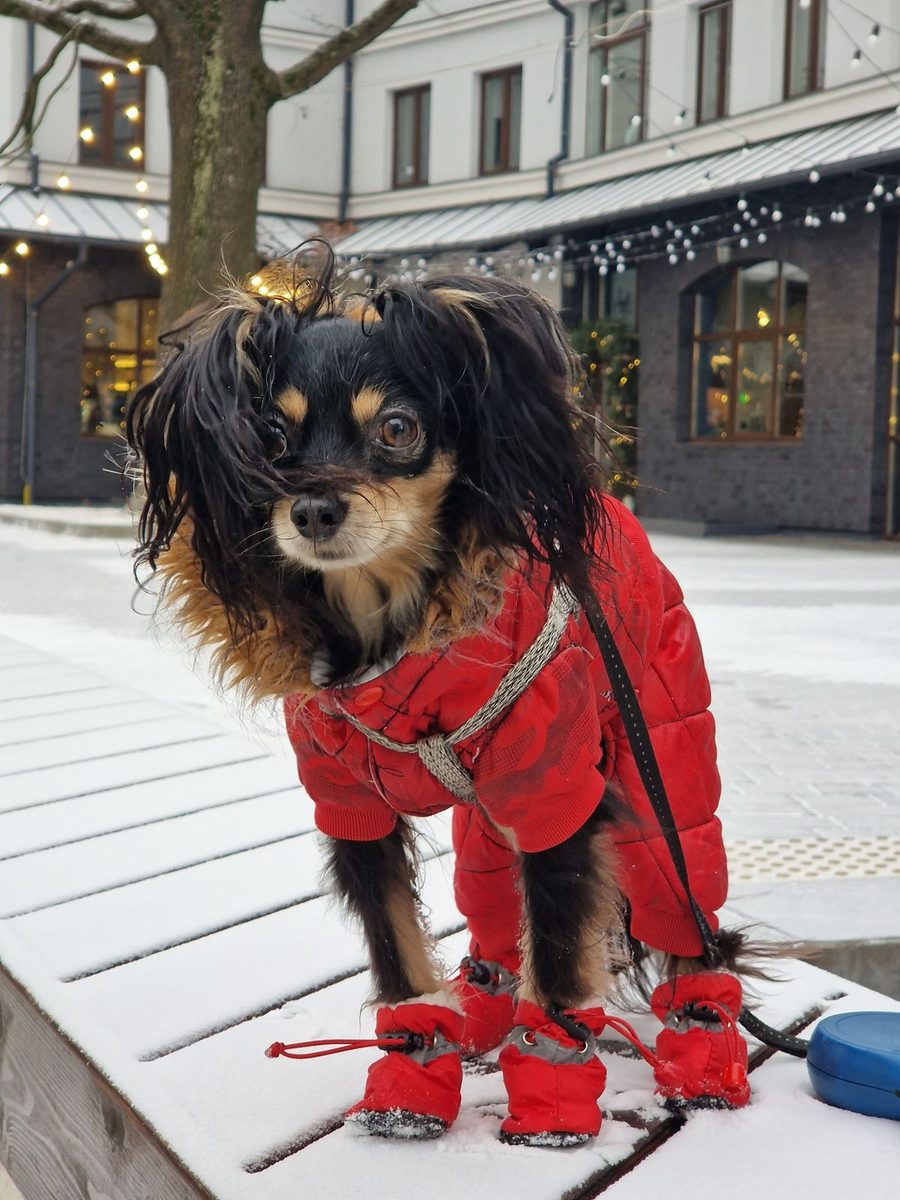
Boots fail for one reason most of the time: the size is wrong. Measure the paw while the dog is standing. Go from the back of the heel pad to the tip of the nails, and don’t count fur. Then measure across the widest part of the paw. Front paws usually run a little bigger than back ones. A good boot slides on with a small push and stays put with the strap at normal tension. If you can twist it around the paw, it’s too big, and it will come off in the first snowbank.
Two features earn their price: a sole with real tread for icy patches, and a strap you can fasten with gloves on. A reflective strip helps too, once the clocks change and the whole walk happens after dark (we covered that shift to evening walks in September).
A four day introduction
Day one, the boots sit on the kitchen floor and the dog gets treats for sniffing them. Day two, one boot goes on one front paw, more treats, off again after a minute. Day three, two boots and three steps across the room. Day four, all four boots, five minutes of normal life indoors, then the driveway and back.
The AKC’s boot guide describes the same progression: short sessions, a little longer each time, and a close eye on the dog. A dog who freezes mid-step or starts bunny-hopping is telling you the step was too big. Take the boots off, end on a treat, repeat the easier step tomorrow.
One practical thing that saves the whole project: put the boots on inside, by the door, before the walk starts. Fumbling with four straps on a cold driveway at 7am is how the boots end up in a closet until March.
When boots are the wrong answer
Not every dog needs them, and not every kind of weather calls for them. Deep, soft snow is insulation, so a boot adds nothing except a thing to lose. Dogs with wide, flat feet often do better in a wax than a shoe. A dog who panics at the sight of them is better served by shorter routes on the coldest days.
The alternatives work fine on their own: paw wax before the walk, a trim of the hair between the pads done by someone with clippers and a steady hand, and a washcloth at the door when you get home. The paw station routine from our fall mud post handles the rest.
If you do use boots, take them off at the threshold. The whole point is keeping de-icer off the pads and out of the house.
And read the bag of whatever you spread on your own steps. Even melts sold as pet-safe can contain urea, which causes drooling and vomiting if a dog eats it.
The five item kit by the door
An old towel that lives by the door. A warm washcloth or a silicone paw cup. A mesh bag so the boots dry and stay findable. Pet-safe melt for your own walk and steps. A tin of paw balm for the cracked weeks in January.
That’s the whole kit. The towel and the washcloth cover most winter paw problems. The boots take care of the rest.
The point of doing it now
Boots cost less than an emergency visit for a cut pad, and the training costs four days of treats. Order them this week and the first freeze becomes a five-minute drill in the hallway instead of a three-legged hop on a Tuesday morning. The dog will walk like the floor is lava for a day or two. Then they trot out the door and forget the boots are on, and you are the only one still thinking about them.