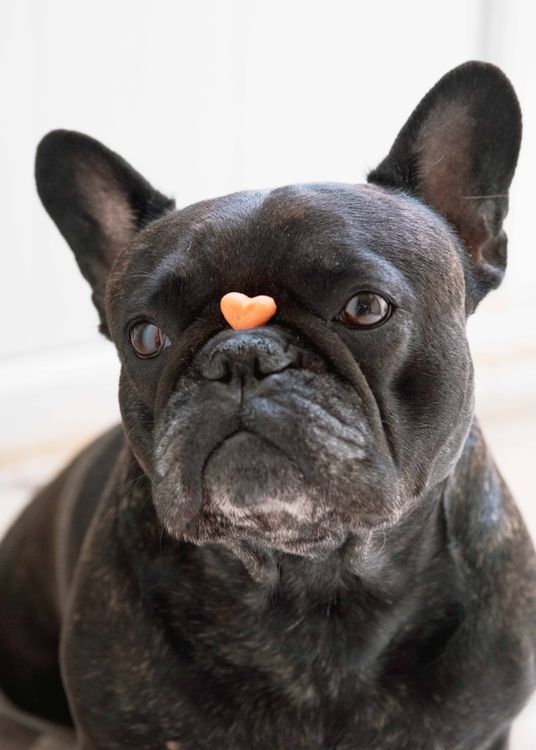
Ask a dog to wait with a treat within reach and you can watch the internal argument play out across its face. New research from Budapest suggests more is going on in there than simple obedience.
Researchers at ELTE’s Department of Ethology and the HUN-REN Research Centre of Natural Sciences fitted 14 well-trained family dogs with six small gel electrodes and recorded their brain activity while each dog held a wait with a reward sitting in front of it. Twelve dogs worked for treats, one for a toy, one for both. Each trial ran about 30 seconds, and the team collected 226 recordings. One eager participant grabbed the reward early, so its affected results were dropped.
While the dogs waited, theta waves rose. These are slow rhythms cycling roughly four to eight times a second, and the increase was strongest at the front middle of the head. Frontal theta is one of the patterns that shows up in people holding themselves back from something they want, and the team published the comparison in Animal Cognition.
The limits matter. Fourteen dogs is a small group, all already trained, and theta also appears during attention and anticipation, so nobody can claim to know what the dogs were thinking.
What this means for your dog: a wait is not just a party trick. It is a short spell of real mental work, which explains why it tires dogs out and why it collapses when you stretch it. Keep reps brief, pay on release, and stop while your dog is still getting it right. If your wait works in the kitchen and vanishes in the yard, that is a different problem, and we have written about why cues go missing outdoors. The ELTE release has more on the setup.