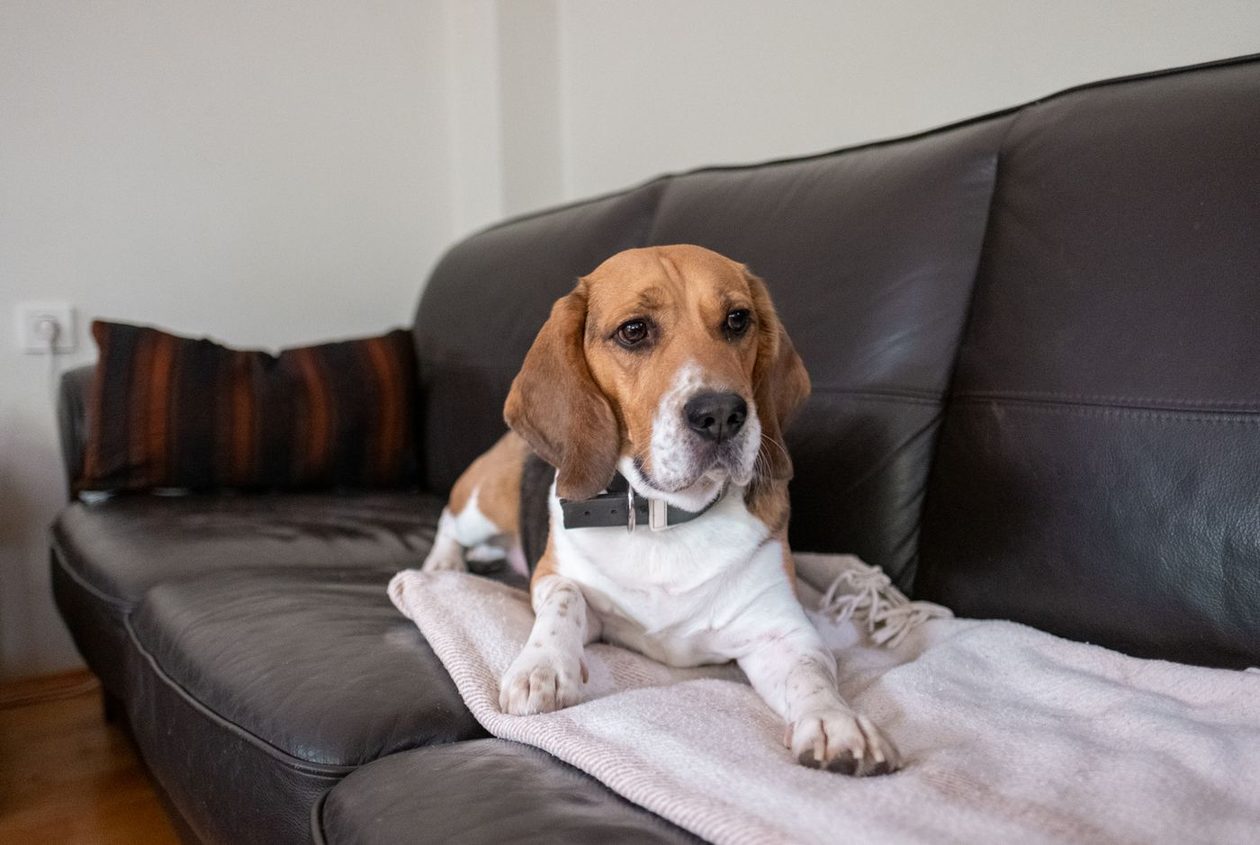
You stop noticing your own house after a few weeks. Then someone visits, does a small polite sniff in the doorway, and says nothing. That silence is a review.
The dog usually isn’t the main problem. A freshly bathed dog still leaves skin oils on the cushion he claims, dander in the rug, saliva on the throw he licks, and wet fur on whatever he leans against after a walk through fallen leaves. None of it is dirt you can see. All of it is the kind of residue fabric holds onto long after the visible hair is gone.
November makes it worse without doing anything dramatic. In July the windows are open and the house breathes. By November they’re shut, the heat is on, and every cushion, curtain and dog bed gets gently warmed for eight hours a day. Same dog, same house, louder smell.
Start with everything that isn’t the dog
Washing the dog again is the instinct, and it rarely fixes the smell. Canine Journal’s guide to what actually makes a home smell like dog points at the soft things: bedding, upholstery, collars, toys, and the moisture that gets into all of them. The takeaway is simple and slightly annoying. You can bathe a dog every week and still live in a house that smells like one, because the smell moved into the sofa in September.
Five things nobody washes
The bed insert is easy to forget. The cover goes in the wash. The foam inside doesn’t, and foam is where oils and moisture settle. If a bed still smells with a clean cover on it, the insert is the answer. Check whether yours can handle a gentle cycle before you commit.
Collars and harnesses get sniffed far less often than the dog does. A fabric collar worn through a wet autumn holds oils, dirt and saliva. Take it off, smell it, and you’ll know in a second whether the last three baths solved anything.
Then there’s the one toy with a history. Plush toys soak up saliva, rope toys stay damp in the middle, and food-stuffed toys hide crumbs where you’d rather not look. Wash what the label allows and retire anything that’s unraveling.
The entry mat and the route from the door to the couch matter more than the rest of the floor. Hair carries oil and outdoor dirt, and it collects where the dog actually walks rather than where you vacuum. Mats and runners in the splash zone want a weekly wash once the weather turns, which is the same math as the muddy paw routine.
Finally, the water bowl. Topping it up isn’t cleaning it. A film called biofilm builds up inside, and a 2023 study of 96 dog bowls found higher bacterial counts on bowls used for wet food than dry. Wash the water bowl daily, the food bowl after meals, and lift the mat underneath so it can dry.
A twenty minute Wednesday
None of this needs a Saturday.
- Two loads of laundry. Bed covers and throws first, then collars and harnesses sealed in a pillowcase on a gentle cycle.
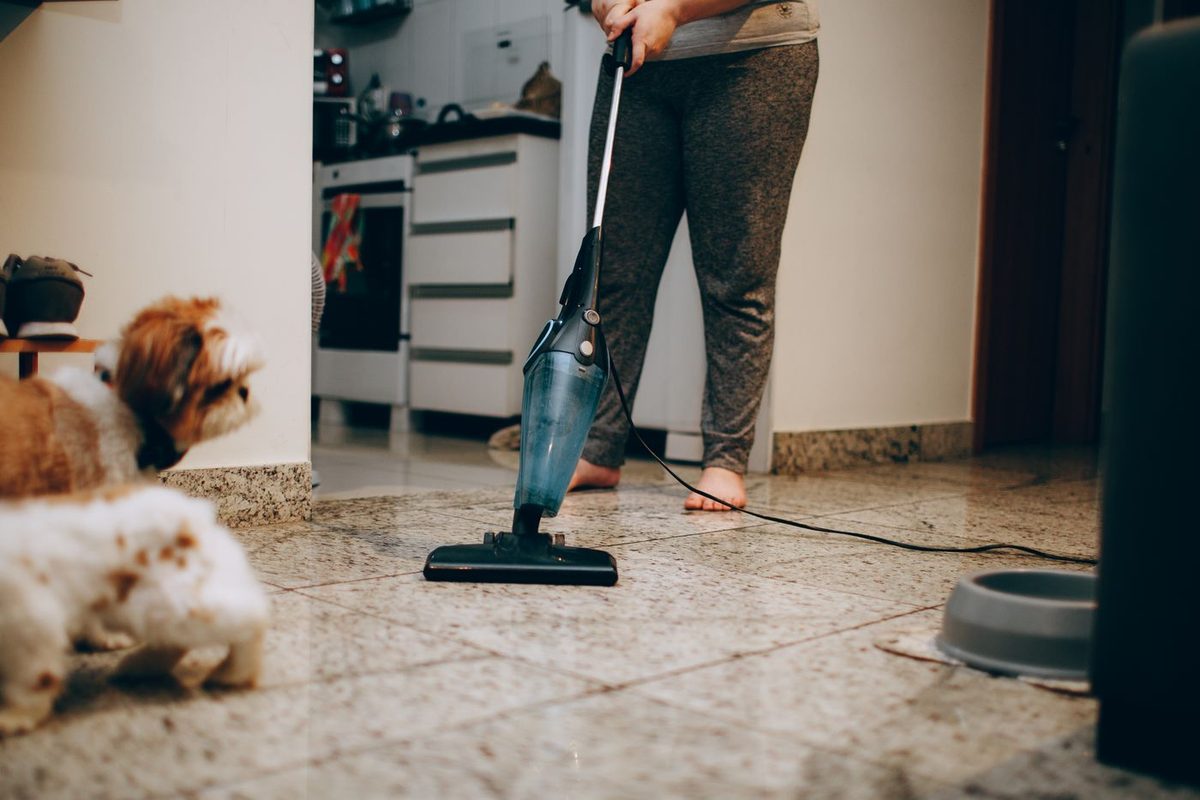
- Vacuum the dog’s route rather than the whole house. Entry, bed zone, couch seams, and under the furniture he leans on. Crevice tool, not the big brush.
- Wipe the water bowl, wash the food bowl, lift the feeding mat.
- Rotate one toy out of service, wash it, put a dry one back.
- Open a window for ten minutes, even in November, and hang the damp towels where air moves.
The CDC’s guidance on pet supplies is a useful sanity check here: routine cleaning covers most of it, and disinfecting is for illness, accidents, or a dog with a health problem. Twenty minutes once a week is the difference between a house where a dog lives and a house that announces one.
When the smell follows the dog
Sometimes the house is clean and the smell is still in the room, attached to the animal. A new, strong or persistent odor is worth a vet call rather than another bath. Fishy smell from the rear, ear odor with head shaking, breath that has changed, or skin that smells sour all point at something shampoo won’t touch. Anal glands, ears, teeth and skin infections are the usual suspects, and all of them are easier to handle early.
Older dogs get their own note. If a house trained dog starts having accidents, that’s a veterinary question before it’s a training question, and the winter routine for senior dogs covers the rest of the cold weather adjustments.
Skip the air freshener
Spraying a room that smells like dog gets you lavender wet dog, and it buys about an hour. Some fragrances and concentrated oils aren’t safe around dogs either. Deal with the fabric first, then see whether the room needs anything else at all.
A house that smells like your dog at a reasonable volume is the realistic target. The mat by the door catches the rest.