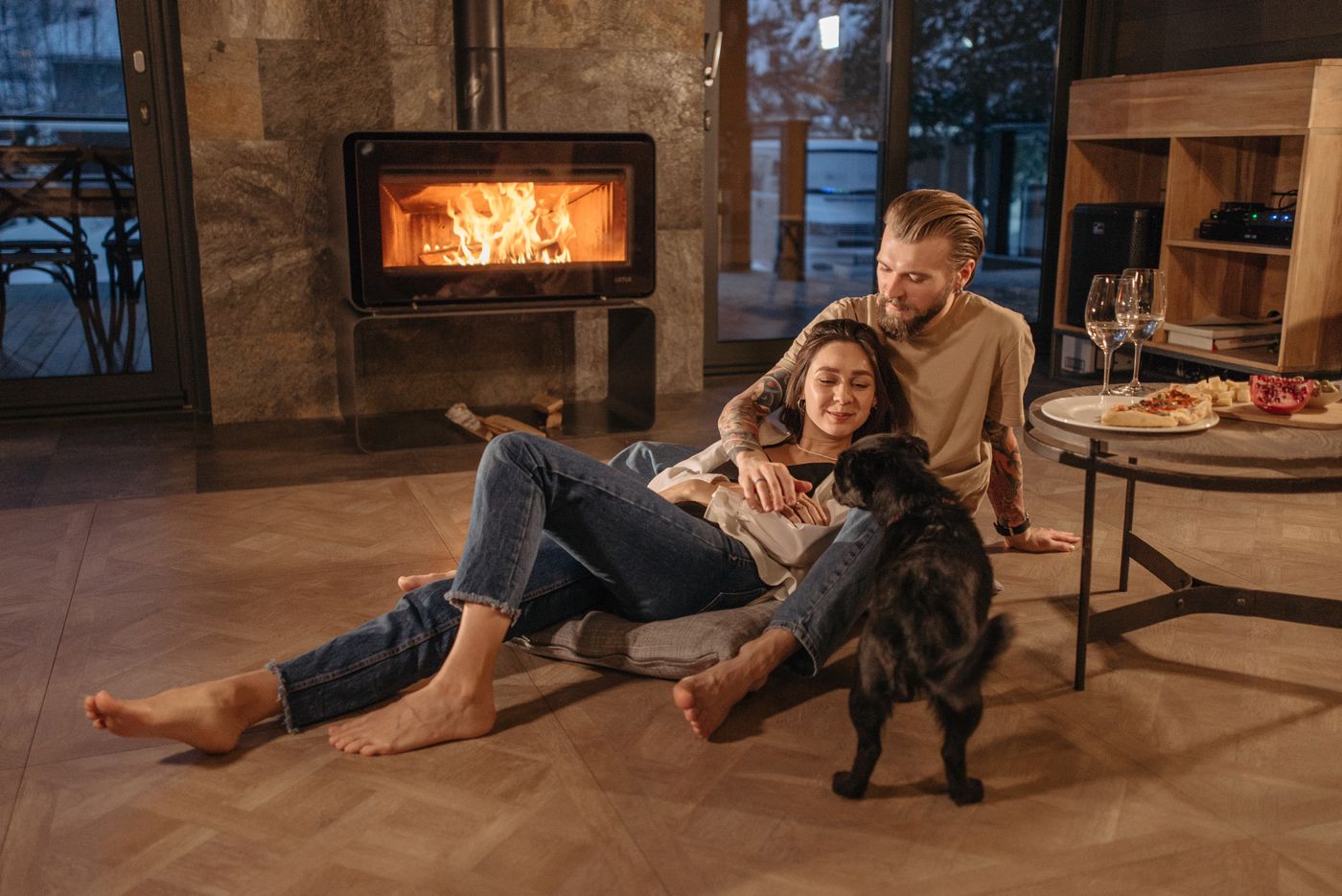
The first cold week of the season, someone lights a candle that smells like a pine forest, and the dog gets up and leaves the room. Or he stays, parks under the diffuser, and scratches all night.
Scent is the part of holiday decorating nobody thinks about, because none of it looks dangerous. A candle on a shelf, a plug-in in the hallway: not food, not within reach, so it goes on the list of things that are fine.
Most of it is fine. A few things are not, and the difference comes down to what a dog can actually swallow and how long a product runs while nobody is watching.
The scent product that sends dogs to the vet
Liquid potpourri and simmer pots are the ones to think about first. Pet Poison Helpline’s holiday guide says that in cats, a few licks of scented oil heated on a stove can cause severe chemical burns in the mouth, fever, trouble breathing and tremors. Dogs are less sensitive, but the guide still treats it as a risk.
If you keep a simmer pot, put it at the back of the stove with the handle turned in. If he gets into the liquid, call your vet or a poison line with the bottle in hand.
Wax melts are the same problem in a friendlier shape. Plain wax is not very toxic, but a scented melt carries fragrance oil, and the tea light cup underneath is the sharper hazard. Dogs chew wax the way they chew everything else, so a warmer at nose height is a borrowed problem.
The diffuser runs all evening and nobody is watching
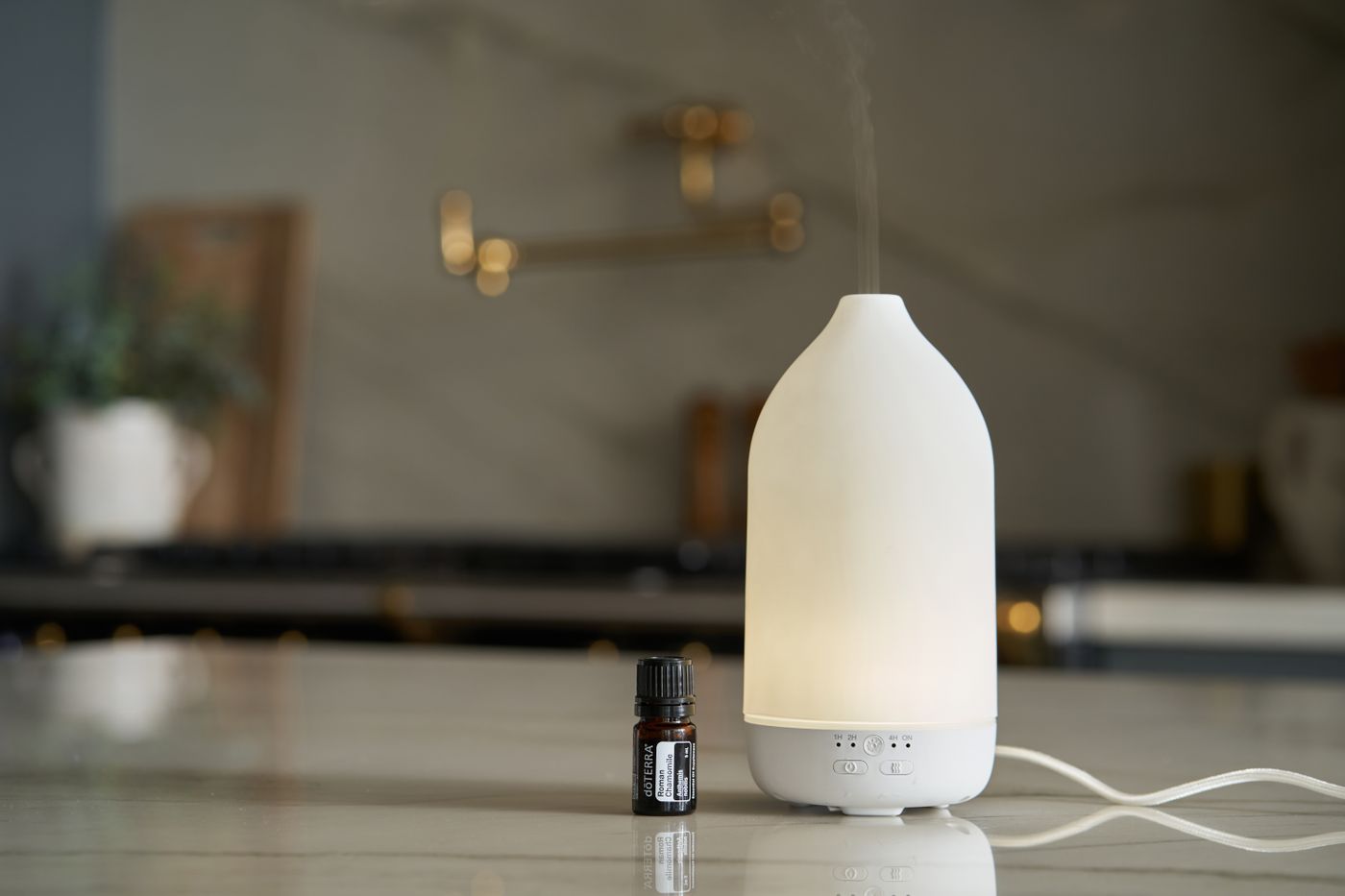
An essential oil diffuser is the product most likely to be running unwatched, in a closed room, for six hours straight. The AKC puts tea tree, eucalyptus and lavender among the oils toxic to pets, and says tea tree exposure can bring vomiting, lethargy, tremors and uncoordinated movement. Peppermint, pine and citrus show up on veterinary watch lists too.
Breathing it is the smaller risk. The bigger one is the film of oil that settles on a dog’s coat and gets groomed off later. A dog who lies under a diffuser every evening takes a small dose on the skin and then swallows a second one. If you run one, do it in a room the dog does not sleep in, leave the door open, and give it twenty minutes instead of the whole evening. Do not put oil on the dog or on his bedding.
Candles are mostly a height and timing problem

A lit candle in a house with a dog is a burn risk before it is anything else. A tail at candle height is the whole story, and we covered that ground before Halloween with the pumpkin and the decorations.
Put it somewhere that will not tip, keep it out of drafts, and never leave one burning in the room where the dog sleeps. Blow it out before bed instead of letting it burn down, and trim the wick so it stops smoking. If your dog has allergies or a sensitive respiratory system, unscented soy or beeswax is the gentler pick, though any flame gives off some soot.
Plug-ins spend all day at nose height
A plug-in in a hallway runs day and night in a space with no window, roughly at nose level for a medium dog. That is a different exposure from a candle you light for an hour. Unplug the ones in bedrooms and in whatever room the dog sleeps in, and go easy on aerosol sprays. If you use one, spray an empty room with the door shut rather than the sofa the dog lies on.
If the goal is covering dog smell rather than setting a holiday mood, washing works better than spraying.
A five-minute check before the tree goes up
- Simmer pots and wax warmers off the floor and out of tail range.
- Diffuser in a room the dog does not use, on short sessions rather than all day.
- Bedroom and dog-room plug-ins unplugged.
- Glass snow globes off low shelves. Some contain antifreeze, which matters if one breaks within reach.
- Holiday plants up high. The poinsettia everyone worries about is only mildly toxic. Holly berries and mistletoe are the ones worth moving.
- Poison control numbers in your phone.
If he gets into it
Drooling, wobbling, tremors, unusual sleepiness or a cough after a scented product means a call now, with the label in your hand. Pet Poison Helpline is 855-764-7661 and the ASPCA Animal Poison Control Center is 888-426-4435. Both answer around the clock and both charge a consultation fee. Do not induce vomiting unless a vet tells you to.
A label that says pine tells you the smell, not which oil is in the bottle or how much, so read it out to whoever answers the phone.
None of this is a reason to live in an unscented house. A dog, a candle and a pot of something on the stove can share a room. Keep the strong stuff out of the rooms where he sleeps, open a window for ten minutes afterward, and let the candle be an evening thing instead of a system that runs all day. He may even stop leaving the room, which is its own kind of review.