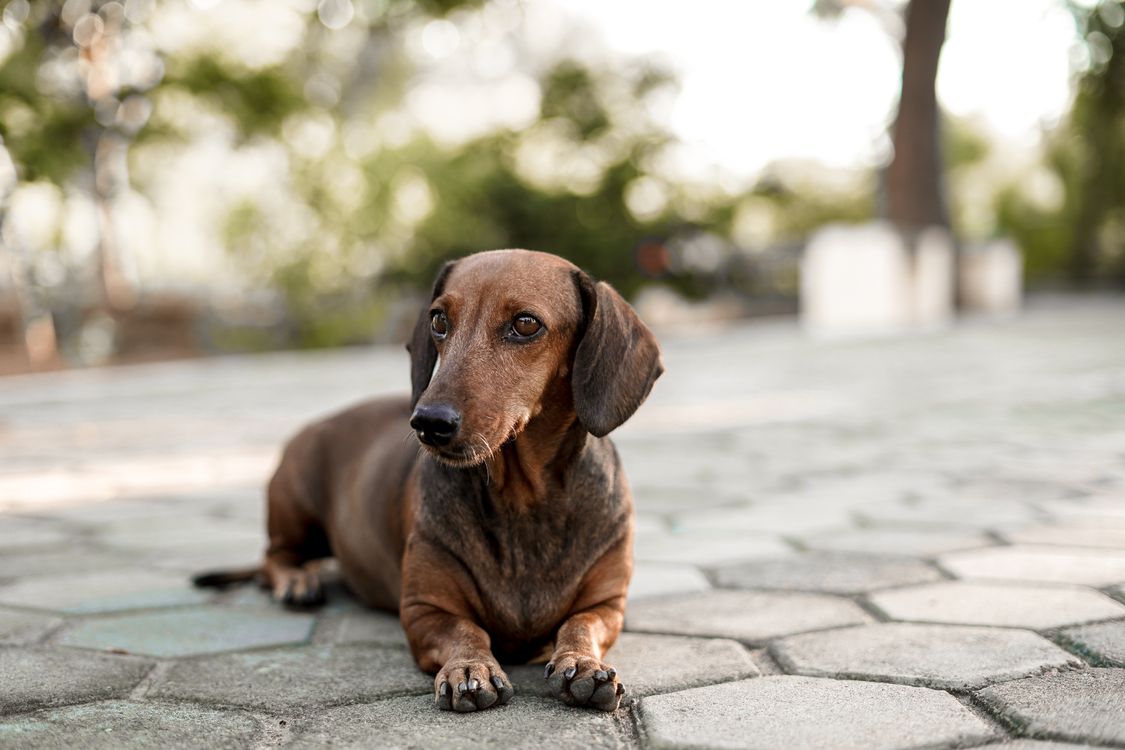
Scooter is 17, so nobody expected him to tear down a racetrack. The senior dachshund showed up to Bella Vista Animal Shelter’s annual wiener dog race anyway, wearing a colorful shirt, and worked his way toward the finish line at his own speed with one of his people beside him.
As he got closer, the crowd started calling his name. When he crossed the line, last of the field, the place broke into cheers. A video of the moment from @whatsupdox has more than 24,000 likes, and the comments treated him like a champion. “There are only winners in his category,” one person wrote.
What this means for your dog: older dogs still want to be part of things. They just do it differently. A senior dog may not run the way a puppy does, but a short outing, a familiar event, or a slow walk around the block keeps them moving, keeps their mind busy, and keeps them close to you. If your dog has slowed down, the goal is not to push them back to their old pace. It is to find the version of the activity they can still enjoy.
Keep an eye on the basics while you do. A change in how your dog walks, stiffness after rest, or a sudden fear of the stairs is worth a vet visit instead of a wait-and-see. There is more help for older dogs now, including newer long-acting arthritis injections that some vets use for pain that was hard to manage before.
Scooter came in last. The crowd did not care, and neither did he. That is the whole point.