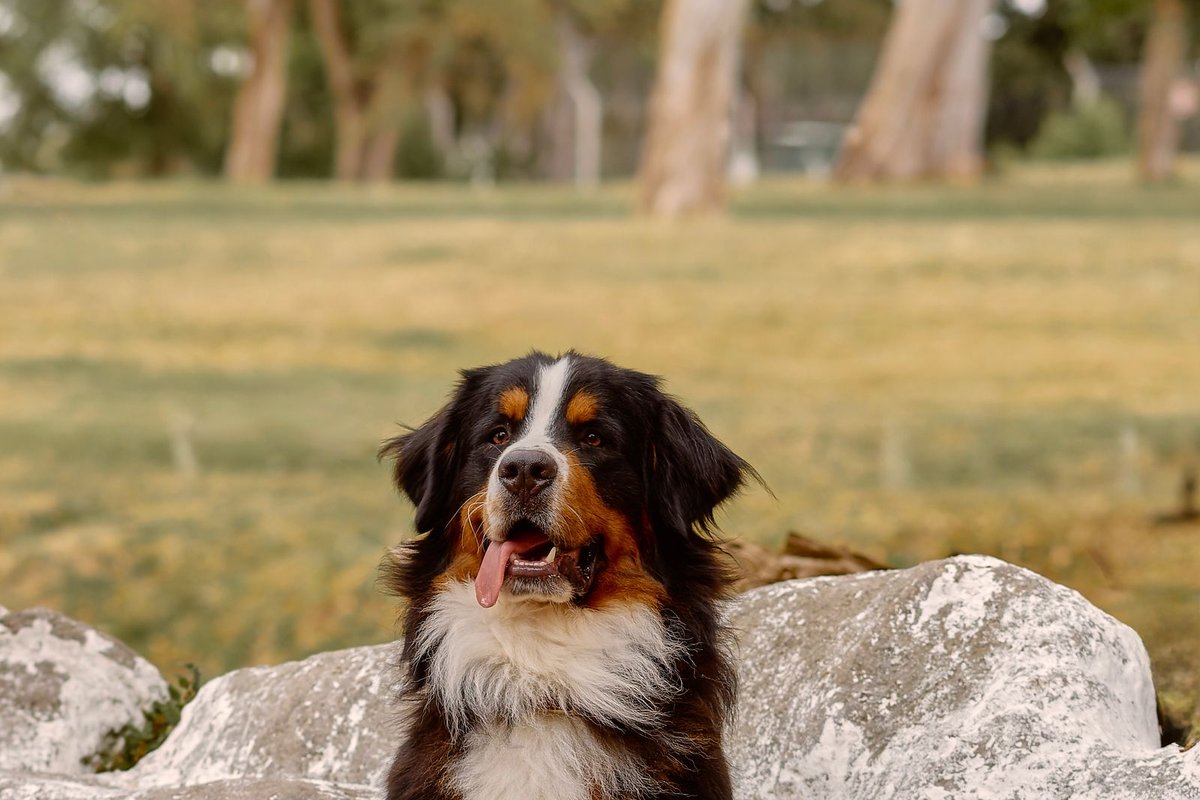
A Bernese mountain dog with swollen lymph nodes usually leaves the clinic with the same diagnosis and the same chemotherapy plan as any other breed. Same disease name, same four drugs, roughly the same odds. Research published on 5 November 2026 suggests the biology underneath that shared plan differs by breed.
Investigators analyzed tumor tissue from 27 Bernese mountain dogs and found a mutation pattern that overlaps with other breeds in part and departs from them in one clear place. A gene called EP300 was mutated in 22% of the tumors in this breed. In a 2025 study of 238 dogs with lymphoma across many breeds, EP300 appeared in roughly 3%. The authors call it a possible breed-specific molecular signature, and it is the first mutational map published for lymphoma in this breed.
What the researchers did
The samples came from the Bernese Mountain Dog DNA and Tissue Repository at Michigan State University. The team, led by Valentina Granziera with Maciej Parys as senior author, ran a 499-gene cancer panel on each tumor and compared results against normal DNA, so only changes acquired inside the tumor were counted. The paper is open access in Veterinary Oncology.
What they found
Somatic mutations turned up in 26 of the 27 samples, or 96.3%. The most common was TRAF3 at 25.9%, followed by TP53, EP300 and MYC at roughly 22% each, and MAP3K14 at 19%. Two thirds of the samples also carried copy number changes, where a stretch of chromosome is duplicated or lost rather than misspelled. Recurrent gains and losses touched KMT2C, PTEN, TP53 and MTAP, among others.
TRAF3 has the clearest mechanism. It normally acts as a brake on NF-kB, a signaling pathway that keeps B cells alive. Break the gene and the brake comes off, which is one of the ways a lymphocyte keeps dividing when it should die. In that respect the Bernese tumors look like lymphoma in cocker spaniels and golden retrievers, where TRAF3 and MAP3K14 mutations are also common.
Why EP300 stands out
EP300 codes for a protein that tags histones, the spools DNA wraps around, changing which genes a cell can read. A mutation there alters how the cell reads its own instructions, which is a different kind of damage from a broken recipe. The team also noticed that EP300 mutations mostly turned up in tumors that did not carry TRAF3 or MYC mutations, which suggests a separate route into the disease rather than an add-on to the usual one.
That is a drug development question. It does not change next week’s appointment. In human diffuse large B-cell lymphoma, EP300 is mutated in about 10% of cases, and researchers are testing drugs aimed at the same epigenetic machinery. Nobody has shown yet that a dog whose lymphoma carries an EP300 mutation responds differently to any treatment. This paper reports mutations, not outcomes.
What this means for your dog
Nothing changes about today’s treatment. If your dog has lymphoma, the standard protocol, the staging, and the decision about whether to treat at all still rest on the same evidence they did last month. The value here is what it makes possible later. A mutation that appears in one in five Bernese lymphomas is a target, and targets need trials before they become options.
There is no test to order. The 499-gene panel used here is a research tool, and it is not offered through your veterinarian. If a company starts selling a DNA swab for lymphoma risk in Bernese mountain dogs, read the fine print. The mutations in this study were acquired inside tumor cells, not inherited, so a cheek swab from a healthy puppy cannot detect them. Breed predisposition is real and separate: a variant in the FANCG gene has already been tied to histiocytic sarcoma in this breed.
What you can do is ask better questions. If your dog is diagnosed, ask whether the lymph node was sampled and immunophenotyped, since B-cell and T-cell lymphomas behave differently. Ask whether a clinical trial is open for the breed or the subtype. Ask what remission usually looks like with the protocol being offered. Our guide to the blood test that can flag lymphoma before symptoms show covers what early detection can and cannot do, and our piece on the lymphoma drug now available for at-home treatment explains an option that changed convenience more than survival.
For the wider picture on screening, vaccines and what actually moves the needle in canine cancer, start with the Dog Health 101 hub.
None of this is medical advice for your dog. Talk to your veterinarian or a veterinary oncologist about diagnosis and treatment.
The limits
Twenty-seven dogs is a small cohort. All samples came from one repository, gathered over years, without a matched group of dogs that stayed healthy. The paper does not link mutations to survival, remission length or response to chemotherapy. It is a first look at an understudied breed, and the authors say so. The result that would change clinical practice is a study connecting EP300 status to how long dogs stay in remission. Until that exists, this is a map. Nobody has drawn the route.
The study, Identification of somatic mutations in lymphomas of Bernese Mountain dogs, was published in Veterinary Oncology on 5 November 2026. The 3% comparison figure comes from a 2025 genomic study of 238 dogs with lymphoma.