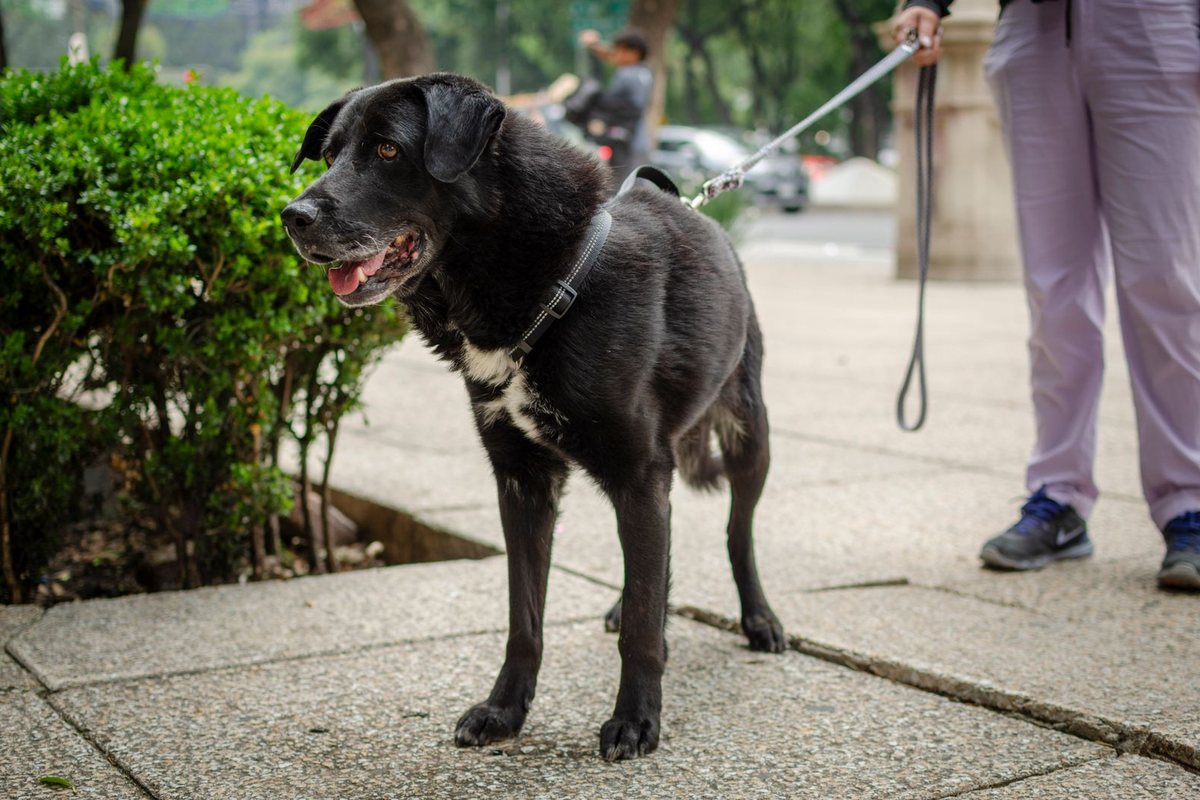
The other dog appears at the end of the block and yours turns into a different animal. Barking, lunging, spinning, a growl you have never heard indoors. You shorten the leash, mutter an apology, and haul him around the corner.
A dog who barks at other dogs is trying to solve a problem, and the leash took away his tools.
Two dogs can put on the same show
K.I.S.S. Dog Training in Kansas City makes a useful distinction in a recent post on leash reactivity: most reactive dogs want one of two things. Some want the other dog gone. Others want to say hello so badly they cannot stand it. From across the street, both look the same.
Start with the dog who wants space. Something about the approach feels threatening, so he freezes, turns away, tries to back up. The leash cancels all of it, so he reaches for the loudest thing left, and if the other dog keeps walking, he learns that lunging makes scary things leave.
Now the greeter. He wants to close the gap, the leash stops him, and excitement curdles into a tantrum.
Fearful dogs need distance and a way out. Frustrated greeters need practice at not getting what they want on demand. Most owners are handed one plan, and it fits only one of these dogs.
Watch the two seconds before the noise
Most dogs telegraph the explosion: body stiffens, ears pin back, tail tucks or goes rigid, hackles lift. Some lick their lips or stare at the pavement.
The most practical signal is food: a dog still taking treats is usually still thinking. The moment he spits out a piece of cheese and turns from your hand, you are too close. Treat refusal is your early warning system.
Find the distance where your dog can still think
Every reactive dog has a working distance: close enough to notice, far enough to stay reasonable. Fifteen feet for a steady older lab, forty for a bouncy adolescent.
Measure yours in car lengths rather than feet, then protect it. Crossing the street is not losing an argument.
Teach the skills where nothing is happening
A walk is the worst classroom in the world, so start in the kitchen. Three cues carry most of the load: a hand target, a “find it” that sends his nose to the floor, and a watch of your face. Feed part of his daily food by hand while you practice, so paying attention to you is a habit before anything is at stake.
K.I.S.S. trainers report one to three sessions, two weeks apart, before they expect a realistic “leave it” in the backyard. Not the street. For the dog who pulls rather than reacts, our loose leash walking plan covers the other half.
The driveway game
Take the cues outside in small steps: backyard, driveway, quiet streets. Each move will feel like starting over, which means the jump was too big, not that your dog forgot everything.
At every driveway, stop and ask for a sit and a look at your face. Count to five or ten. Feed, then release him to walk on. Do that at every driveway for a week, then every second one, then every third.

The sit is almost beside the point. What you are building is a walk where checking in with you becomes the rhythm, practiced when nothing is happening instead of demanded during a crisis.
When another dog appears
Add distance before you ask for anything. Turn around, cross the street, step behind a parked car. Then feed the trigger: dog appears, cheese appears, dog leaves, cheese stops. Repeat until a distant dog makes him swing his head toward your pocket without being asked.
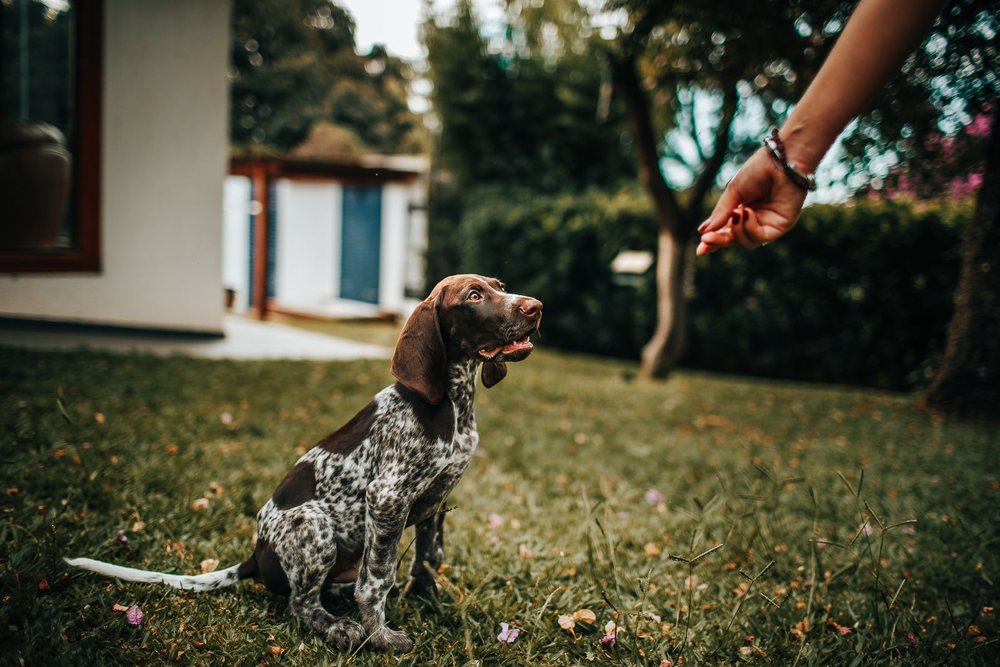
If he can hold a cue at that distance, ask for one. A hand touch or a scatter of treats gives him something to do that is incompatible with lunging. Close the gap a few feet at a time, and only when the last distance was easy. Our guide to adding distractions without blowing up the exercise covers how small those increments should be.
Never punish the lunge. The AKC’s guide to leash lunging is blunt about this: corrections make the problem worse. A leash pop can quiet a dog for a week while teaching him that other dogs predict bad things, the belief you are trying to dismantle. Prong and shock collars on a frightened dog produce one who stops warning and starts biting with less notice.
What progress looks like
A dog who notices, checks in, and keeps walking is the realistic target, not one who ignores other dogs entirely. First changes show in weeks, not days, and bad days after a good week are normal.
If week six looks like week one, the setup is too hard or the dog needs a different plan.
When to bring in help
Call a certified force-free trainer who specializes in reactivity if there is no distance where your dog will still eat, if things are worsening rather than plateauing, or if it starts showing up toward people in your home. A veterinary behaviorist is the right call with a bite history, and medication is a legitimate part of the plan, not a failure.
None of this is fast. What it buys you is a dog who can pass another dog without his nervous system going off.