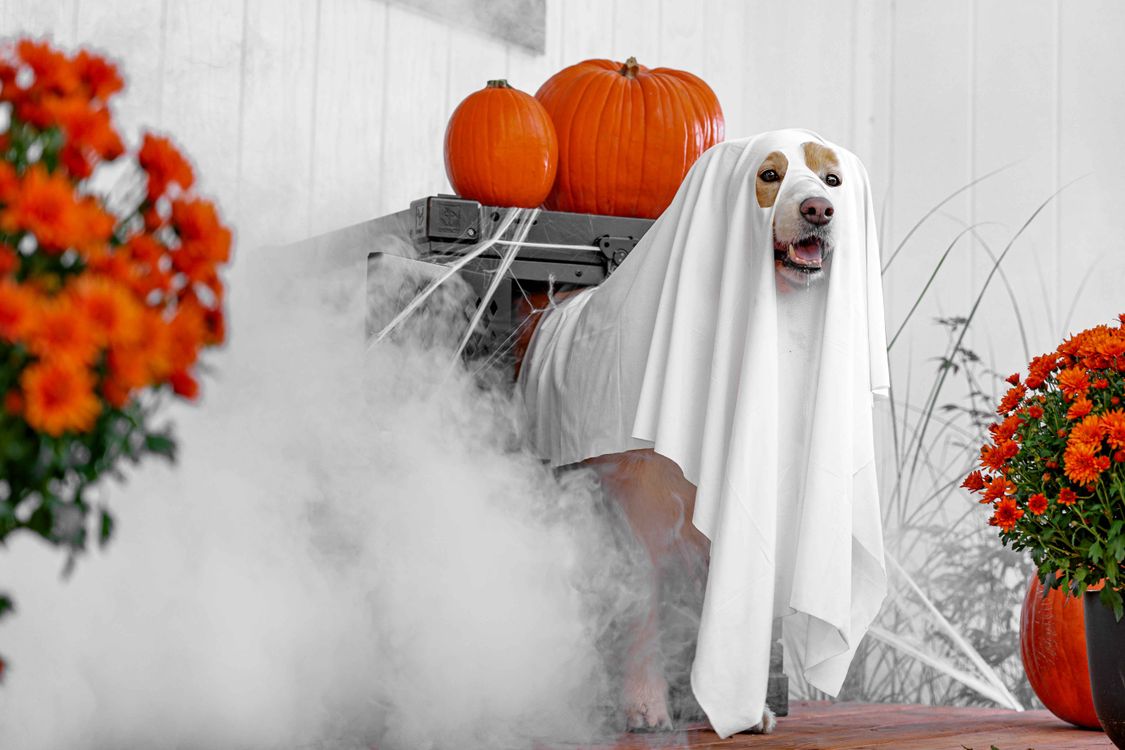
Veterinary teams start warning about Halloween in September for a reason. The holiday piles several of the most common emergency visits into one evening: candy, wrappers, costume parts, decorations, extension cords, and a front door that opens thirty times after dark.
Chocolate gets the headlines, but xylitol is the one that catches people out. The sweetener, found in sugar-free gum and some candies, is far more dangerous to dogs by weight than chocolate is. Raisins are another quiet risk, and wrappers matter too. Foil, cellophane, and lollipop sticks do not pass through and can turn into a blockage. Veterinary Practice News put together a hazard list for clinics to share.
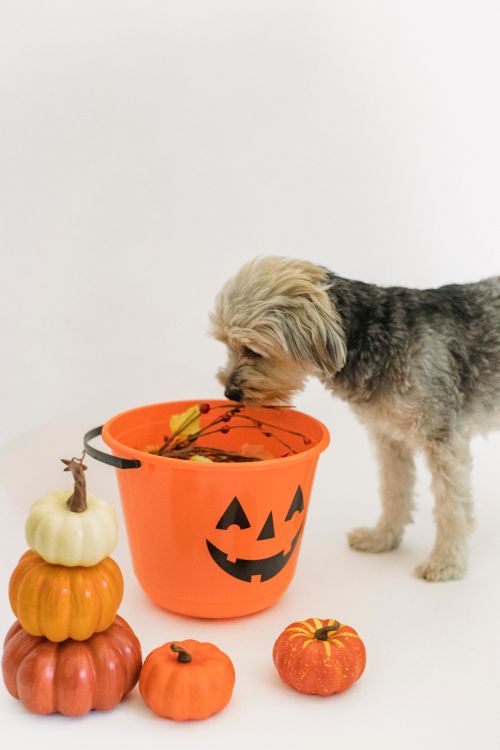
Costumes come next. Anything that dangles or lights up is fair game for a dog who has decided it is a chew toy, and the small plastic pieces inside go down fast. A lit candle in a pumpkin sits one tail swipe from a burn, and the cords running to the decorations are the same cords you have been telling your dog to leave alone all year.
What this means for your dog: walk her before the trick-or-treating starts, then give her a room away from the door with something to chew while the doorbell does its worst. Check the costume for loose pieces before you take photos, and take it off before the party. If your dog does make a break for the sidewalk, a current ID tag and an up-to-date microchip are what bring her home, which is how Owl made it back four years later. Evenings are darker earlier now, so a light-up collar earns its keep, and our story on what changes on fall evening walks covers the rest.