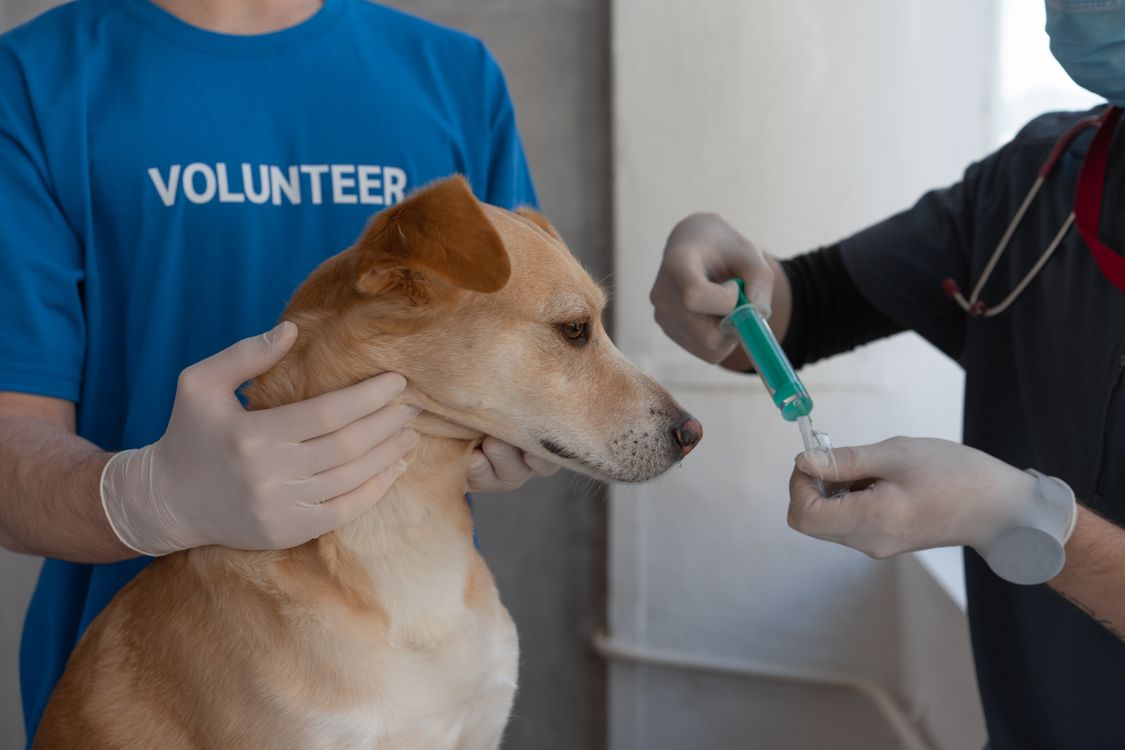
The first shot your puppy gets does not make your puppy immune. It hands the immune system a piece of a pathogen to study, and studying takes two to three weeks.
That would be simple enough except for mother’s milk. A puppy picks up antibodies through colostrum, and those antibodies grab at anything foreign, including the modified virus in a vaccine. A dose given while maternal protection is still high can be neutralized before the puppy’s own immune system gets a look. That protection fades somewhere between 6 and 16 weeks, and nobody can name the day it happens for your particular puppy.
Hence the series. Three or four doses spaced two to four weeks apart mean at least one lands after the maternal antibodies have dropped, as the AVMA explains. The last one usually comes at about 16 weeks. Skip it, or stretch the gaps, and you leave a window where the puppy is unprotected and still investigating everything on the ground.
Spacing matters in the other direction too. Shots less than two weeks apart can interfere with each other, which is why vets do not simply pile on extra doses.
What this means for your dog: treat the schedule as the point, not the paperwork. Keep the appointment even when the puppy seems perfectly fine, because the shot is not treating an illness, it is building a defense. Until a week or two after the final dose, keep a young puppy off ground where unknown dogs walk: dog parks, pet store floors, highway rest stops. Carry him through the busy spots, invite healthy known dogs to a private yard, and put the socialization hours into people instead. Parvo cases are down sharply, but puppies still face real risk, and parvo does not care that your puppy is friendly.