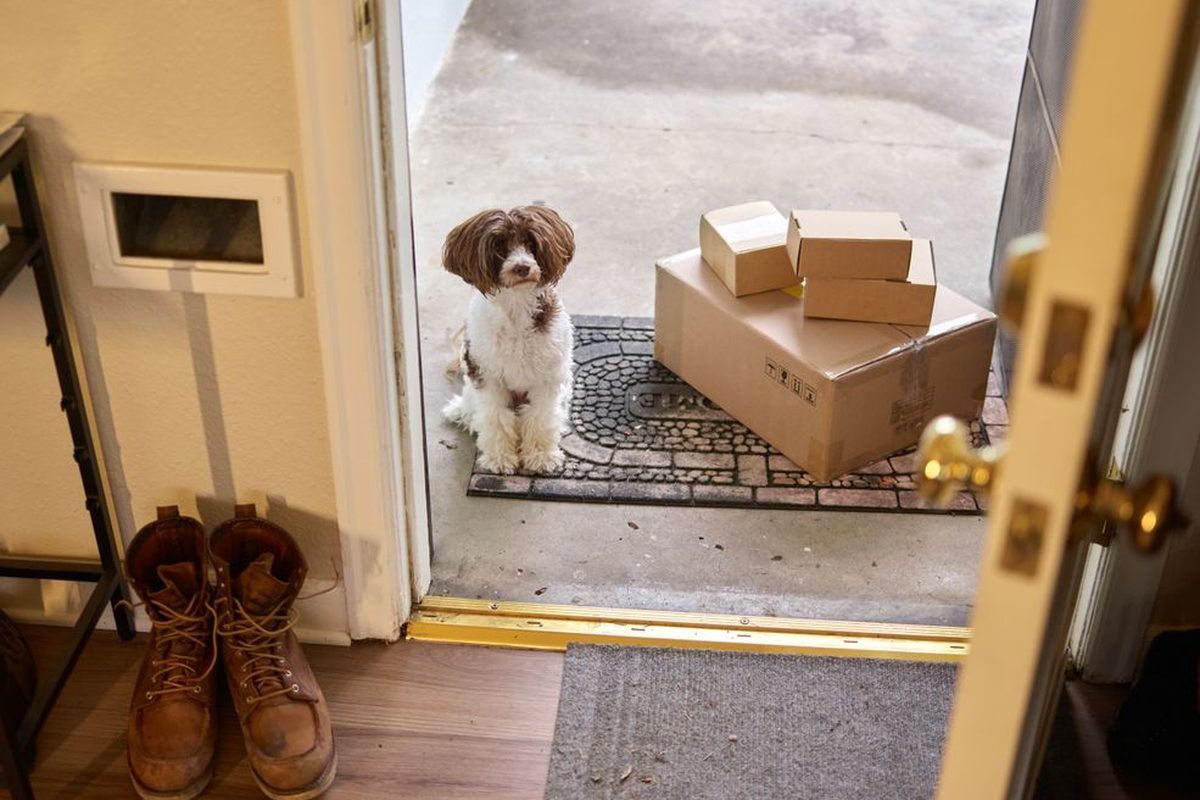
You pick up your keys and the dog is already by the door, ears back, panting. You come home to a chewed door frame and a note from the neighbor about the howling. The frozen food toy you left lasted four minutes.
Separation anxiety is a panic response to being left, not a spoiled-dog habit. Boring departures help around the edges. What works is slower: teach the dog that your leaving is ordinary, then stretch the time alone in steps they can handle.
First, work out what you are dealing with
A bored adolescent chews a cushion, feels better, then sleeps. A dog with separation anxiety is in distress most of the time you are gone, and the signs cluster near exits: pacing, drooling, barking soon after the door closes, soiling in a house-trained dog, no interest in food. The AKC’s guide to alone time lists the same signs.
Record thirty minutes with a phone after you leave: does the dog settle after ten, or is the pacing still going when you walk back in?
Why the usual fixes miss
Cheerful goodbyes help, but the panic starts on a chain of cues: shoes, keys, the lock. By the time the dog notices, they are at the edge, where nothing calm gets learned. Practice absences have to be shorter than almost anyone expects. Seconds, not hours.
Two shortcuts to skip. Crating a dog who panics can end with broken teeth and a dog who now fears the crate too. A second dog rarely fixes this, because the distress is about your absence, not an empty building.
Step 1: Unhook the departure cues
Pick up your keys, put them down, sit on the couch. Ten times a day for a week, going nowhere. Then shoes on, no leaving. Then coat on and coffee made, still no leaving. The cues stop predicting hours alone.
A dog who stops watching you get ready is telling you the door is worth a try.
Step 2: Start smaller than feels reasonable
Begin with a closed door between rooms while you are home. Five seconds on the other side, then back in with a calm word. Ten. Thirty. If the dog scratches at the first attempt, stay in the room and stand up and sit down again. A bed beyond the door gives them somewhere to wait out a go-to-place routine.
When five seconds through the front door works, add a few more. Treat the dog’s stress, not the clock, as the signal to stop.
Step 3: Stretch the time in uneven steps
One ladder runs five seconds, ten, twenty, forty, a minute, two, four, eight, fifteen, thirty. Move up only when the current step has gone well several times, and drop to half the last duration when two sessions go badly. Skipping that rule turns a three week plan into a three month one.
Keep the steps uneven. If every absence is longer than the last, the door starts to mean a countdown, so mix in quick exits.
Step 4: Leave something that outlasts your exit
A stuffed frozen food toy, a puzzle feeder, or kibble in a snuffle mat gives the dog a job in the minutes after the door closes. Hand it over five or ten minutes before you go, so they are already working.
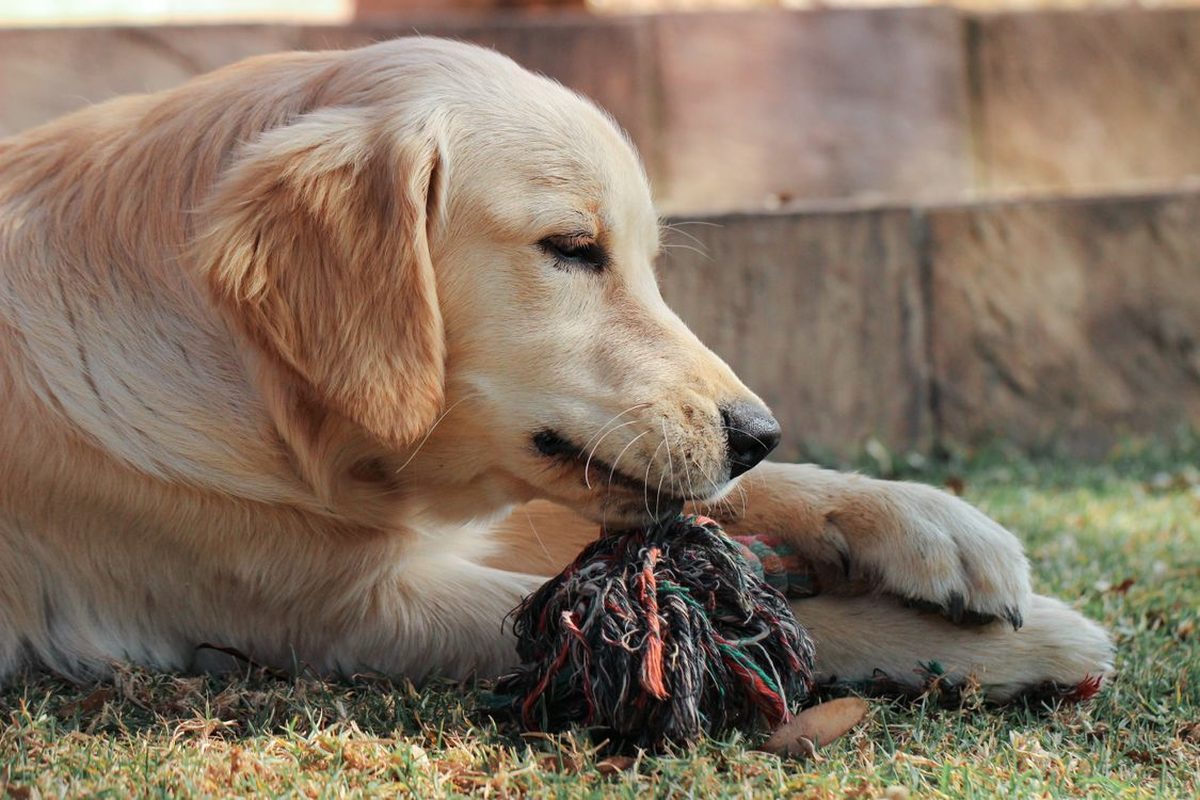
Twenty minutes of chewing cannot cover four hours, and skipping ahead teaches the dog that the good part ends and the panic starts.
Step 5: Spend the dog’s energy before you go
The AKC recommends thirty minutes of real aerobic activity a day for anxious dogs, before you leave. A tired dog is not a cured dog, but one who has spent energy starts from a lower alarm.
Fetch followed by your exit pairs high arousal with isolation, so walk, sniff, come home, let them settle, then leave.
What progress looks like

Mild cases move in weeks, moderate and severe ones in months, and not in a straight line. A move, a new baby, or a week of visitors can send you back a few rungs.
Progress depends on not leaving the dog longer than they can manage, which is hard with a job. A midday walker, daycare, or a neighbor is part of the treatment.
When to call for help
Start with your vet. Pain and cognitive changes in older dogs look like anxiety from the hallway. If the dog injures themselves, cannot eat while alone, or panics within seconds, ask about a certified separation anxiety trainer (CSAT) or a veterinary behaviorist.
Medication is not a last resort. The AKC’s separation anxiety guide notes that vets may prescribe amitriptyline or alprazolam, and with real separation anxiety it often makes the training possible.
What not to do
These all come down to suppressing a behavior instead of teaching a better one:
- Punishing the mess on your return. The dog cannot connect it to something hours old.
- Letting the dog cry it out. Flooding a panicking dog makes the panic deeper.
- Using the crate as the answer when the dog has not already chosen it.
- Assuming it is fixed because the neighbor stopped complaining.
The holidays will add absences whether or not the dog is ready. Start the short trips this week, while the door is still mostly closed and the practice is cheap.