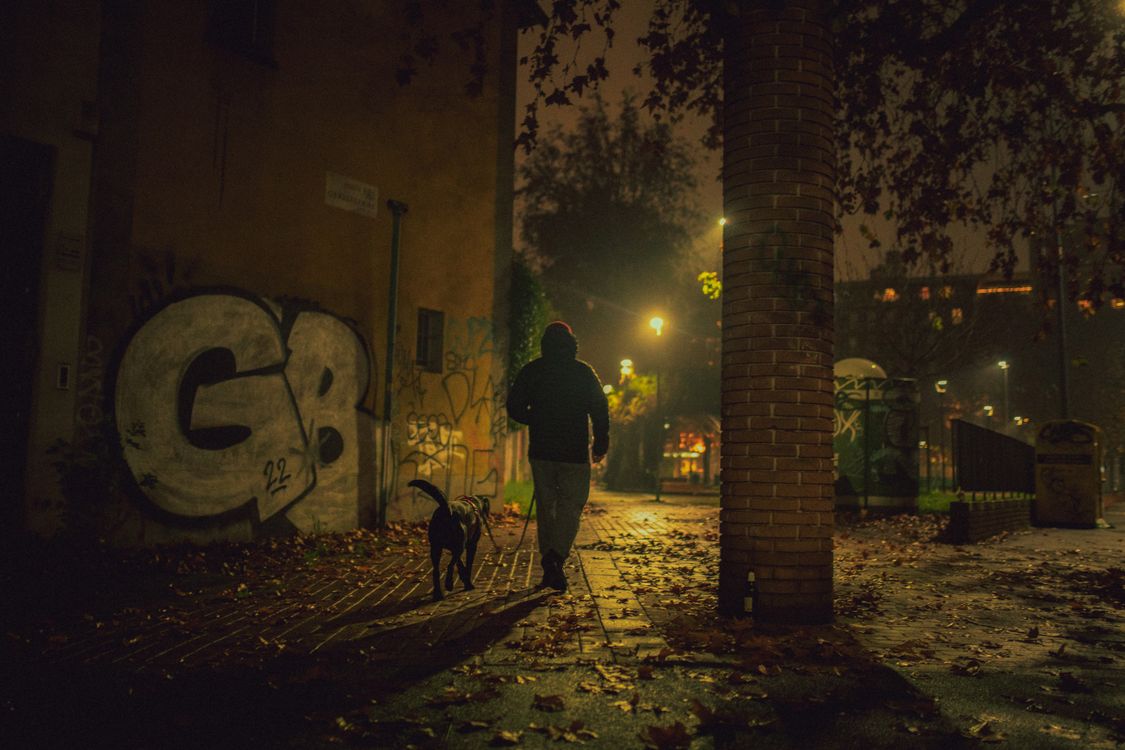
Fall announces itself at dinnertime. You look up from the plate, see full dark outside the window, and notice your dog has been staring at the leash hook for ten minutes. Same walk, later hours, and nobody asked either of you.
The schedule shifts before you notice
The autumn equinox is behind us, so sunset pulls in a few minutes earlier every afternoon through late October. Before long the after-dinner loop is happening in conditions you would have called night back in July.
You do not have to change the walk itself. You do have to change a few defaults around it, because most of what keeps a night walk safe gets decided before you open the front door.
Reflective gear only works when a light hits it
Retroreflective tape does one thing: it sends light back toward whoever is shining it. That is wonderful when headlights sweep across your dog, and useless on the unlit stretch between streetlights, because nothing is hitting the tape to bounce back.
An active light covers the other half. A clip-on beacon or an LED collar makes its own glow, so your dog stays findable on a dark trail, a rural road, or the block where the streetlight has been out since spring.
Placement matters too. A collar sits low on the neck and shows a driver a narrow band. A harness wraps the chest, which puts reflective material on the front, both sides, and back at once.
To check whether gear is really retroreflective, take it into a dark room and hit it with a flashlight from a few feet away. Real tape throws a bright point straight back at you. Printed silver trim just looks flat. Shiny in the store is not the same as visible on the street.
Dusk deserves its own warning. Drivers’ eyes have not adjusted to the dark yet, and neither have yours.
Route habits matter more than the gear
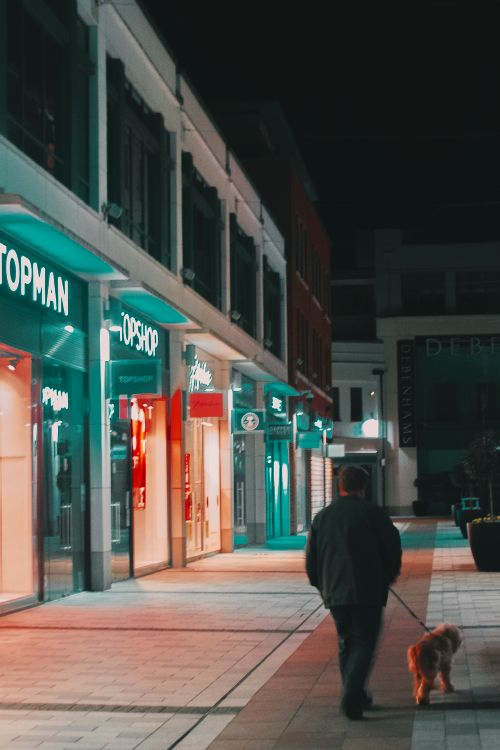
Gear gets the attention. The habits around it do more work.
Stick to a route you know, with streetlights and sidewalks. A trail that is lovely at noon is full of roots, holes, and wildlife after dark.
Keep the dog on a standard six-foot leash near traffic. The extra range a long line gives you on a daytime sniff walk becomes the distance between a dog you can reach and a dog in the road. If your dog still pulls, our loose leash walking plan makes a good October project.
Walk the same crossings the same way. Predictability helps your dog and lowers the odds of a surprise dash.
Skip the headphones. On a dark street your hearing is your first alert, well before you can see a cyclist or a car rolling out of a driveway.
Carry a small flashlight or wear a headlamp. It lights the patch of ground your dog wants to sniff, which is usually where the trouble is, and it leaves your hands free for the leash and the bag.
Wildlife is worth a thought too. Skunks and raccoons are more active after dark, and a startled pull is how leashes end up on the ground.
What is waiting on the ground in fall
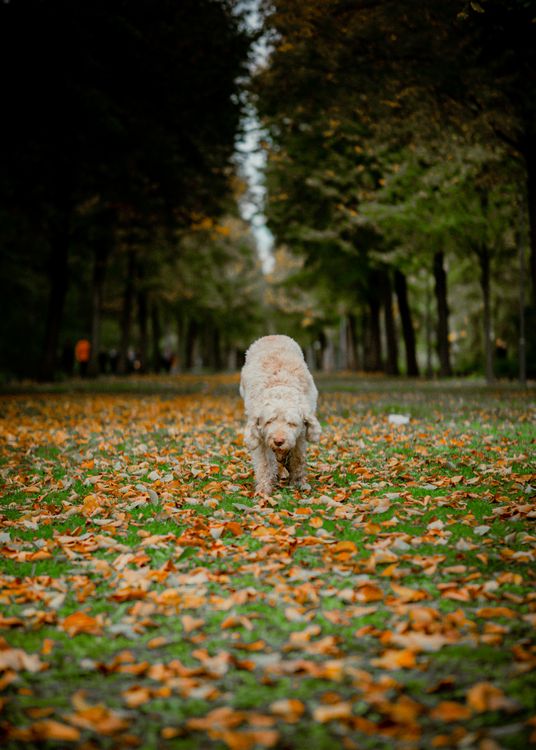
The season changes the sidewalk as well.
Wet leaves hide slick pavement and stay damp underneath, which is the habitat ticks are still hunting in this time of year. Better to steer around leaf piles than romp through them, especially the ones that have been sitting a week.
Acorns are the common one. They are not a poisoning emergency, but the tannins upset a stomach when a dog eats a handful, and a dog who hoovers the ground will find plenty.
Wild mushrooms are the hazard I would take most seriously. Fall is mushroom season, most of what sprouts is harmless, and the toxic minority is genuinely hard to tell apart from the rest, as PetMD’s rundown of fall toxins points out. Do not try to identify them yourself. Move the dog around the patch and out of damp litter.
The ASPCA’s autumn safety guide adds two that live closer to home: rodenticides, which go down in garages and along fences when mice move indoors, and antifreeze from a coolant change, which puddles on a driveway and tastes sweet. Keep the leash on and stay close at home too, not just on the walk.
The five-minute setup
Put this together once and the rest of the season takes care of itself.
- Clip on a harness with reflective piping that runs the full length of the straps, not a single logo patch.
- Add one active light, either a beacon on the harness back or an LED collar, and pick a night each week to charge it.
- Leave the six-foot leash by the door and keep the long line for daylight.
- Wear something light-colored yourself. Drivers often see the person before they see the dog.
- Check that the ID tag is readable and keep your phone in a pocket rather than in the hand you need for the leash.
One honest note
I resisted this for a while. The dark walk sounded like a chore next to the summer version, and buying reflective gear felt like admitting the season was over. It is not. The street is quieter after dinner, the dog gets a longer sniff at every tree, and once you can see each other the walk is the same walk. It just happens with the porch lights on.