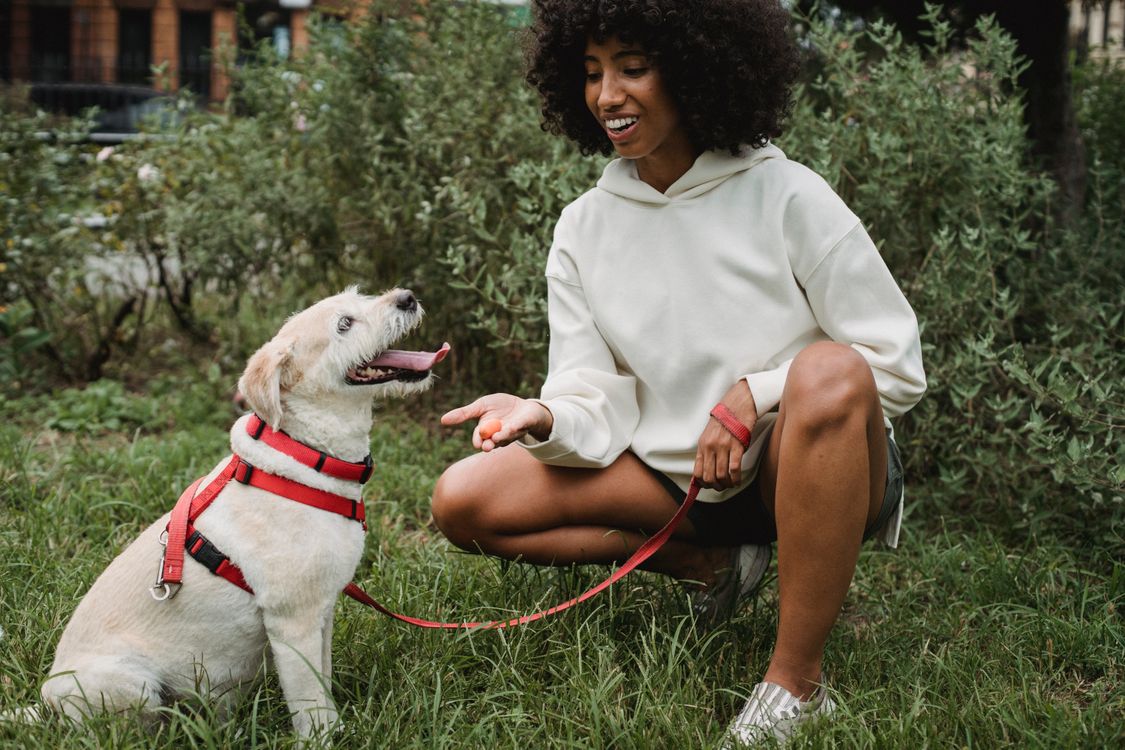
You come home to a couch cushion pulled apart across the floor, and your dog meets you at the door with a low tail. Your first thought is some version of “how do I make this stop?”
The fix is not to make one behavior stop. Pick a behavior you want instead, teach it, pay well for it, and manage the house so the old habit stops paying off. Trainers call that a replacement behavior.
Why “no” is not a plan
Saying no tells your dog that this version of the behavior does not work, and it leaves the need untouched. The dog chewing the couch is bored at two in the afternoon. The dog barking at the fence wants the jogger to keep moving.
Aversive gear (shock, prong, choke) can interrupt a behavior, and that is exactly the problem: it interrupts without answering. The dog learns that visitors or doorways predict something unpleasant, and you end up with a dog who shuts down quietly, or one who gives less warning before a snap.
Karen Pryor Clicker Training puts the alternative plainly: do not spotlight the mistake, keep the dog engaged, and set them up better next time. “A mistake from your animal is really a message to you, the trainer: your learner is confused, distracted, or needs more clarity.”
Step 1: Name what you want instead
Finish this sentence: I would rather my dog…
- Chewing the couch: chewing a toy of their own while you are in the room
- Jumping on guests: four feet on the floor for two seconds
- Barking at the fence: coming to the back door when called
- Counter surfing: resting on a mat while you cook
- Pulling the leash: a slack leash keeps the walk moving
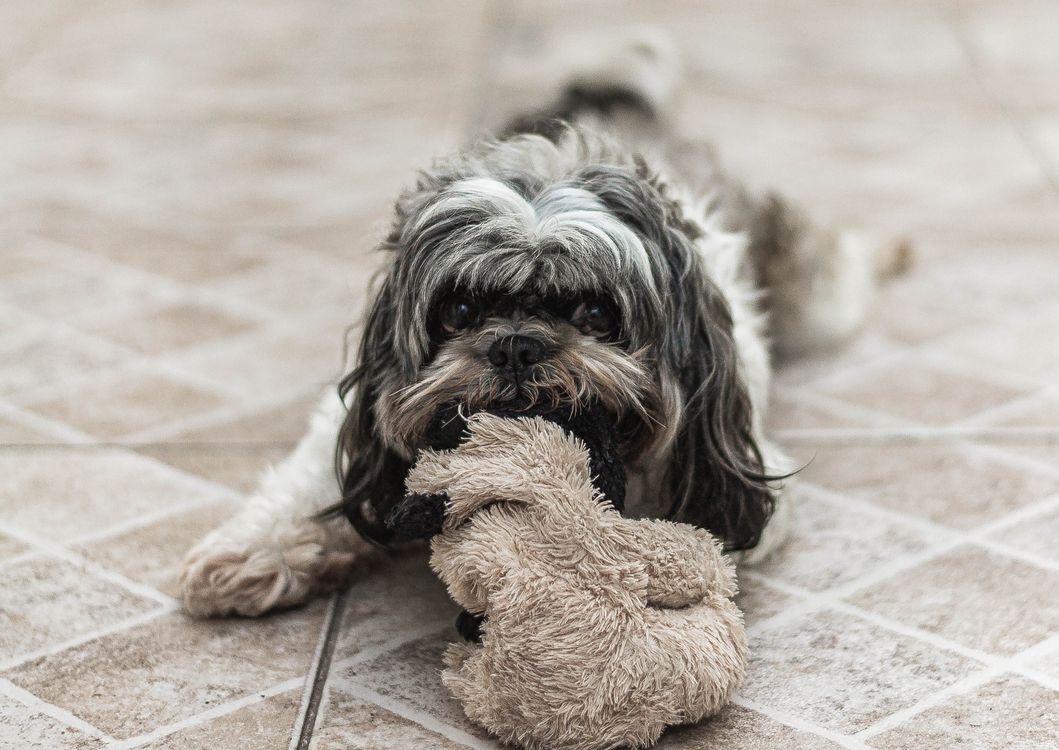
The replacement has to get your dog roughly what the old behavior got them. A chew toy in a closed cupboard cannot compete with a couch cushion, but one on the floor beside you can.
Step 2: Manage the environment so the habit cannot be practiced
Every repetition makes a behavior stronger. A dog who chews a slipper daily for a month gets thirty lessons in how good slippers taste.
So put the slippers away and block the couch with an exercise pen while you are out. Keep the dog on a leash in the yard for a few weeks instead of letting them rehearse barking for an hour.
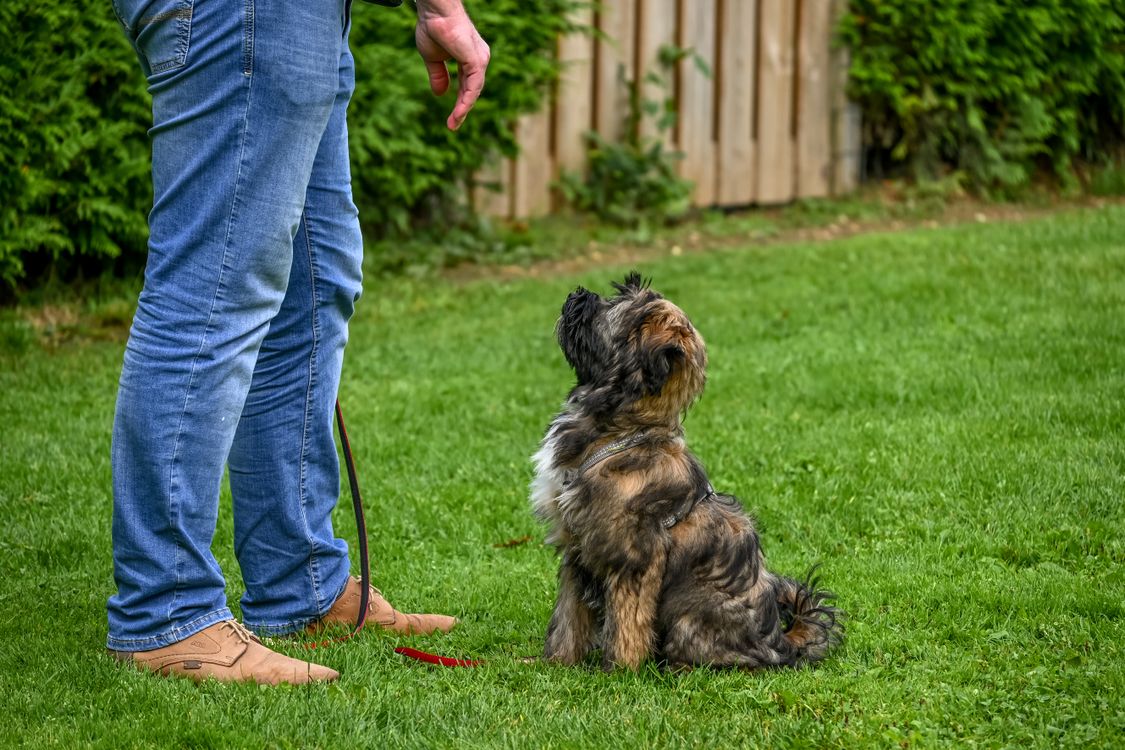
For digging, build a dig box: sand or loose soil where you bury treats and toys. Digging in the box pays, and digging in the flower bed ends outdoor time calmly.
Management teaches nothing on its own, but it buys the quiet repetitions you need without handing your dog more rehearsals of the old one.
Step 3: Pay the new behavior better than the old one paid
Run two or three sessions a day, three to five minutes each, with food your dog does not get any other time. Mark the exact moment the behavior happens, with a clicker or a short “yes,” then treat.
If the dog cannot do it, the setup is wrong, not the dog. Shorten the time, add distance, or break the behavior down. A dog who can hold a stay in the kitchen is not ready for one at the front door with the doorbell ringing.
On timing: a simple habit like jumping often shifts in two to six weeks of consistent practice. A habit rehearsed for three years takes longer, and working breeds need a real outlet on top of a reward schedule. If pulling is the habit you are working on, our loose leash walking plan breaks that down step by step.
Step 4: Handle the moment without a fight
Trade instead of scolding. When the shoe is in your dog’s mouth, offer a chew toy, take the shoe once they let go, and reward the choice. No chase, because chasing teaches a dog to grab things and bolt.
Keep your reaction boring. For a lot of dogs a yell is a payoff, since they got you to engage. The same trade is the backbone of our plan for dogs who guard a ball.
Common mistakes that slow this down
Rehearsal. A dog left alone with the problem for six hours a day is being trained by the house, not by you.
Sometimes paying. If the dog still gets to bark at the fence twice a day, the behavior sits on a slot machine schedule, and intermittent payoffs are the most persistent kind.
When to call a professional
Some behavior is not a training gap. If your dog is growling, snapping, or has bitten, bring in a certified force-free trainer or a veterinary behaviorist.
Destruction that only happens when the dog is alone deserves the same caution, especially with pacing or howling. That usually points to separation-related distress, which needs a different plan and sometimes medication. Sudden behavior changes in an otherwise healthy dog deserve a vet visit, since pain and thyroid problems often show up as behavior first.
What this means for your dog
The reframe is small and it changes the whole week. Instead of scanning your dog for mistakes, you watch for the moment they choose the chew toy over the cushion. Your dog gets a clear route to what they wanted, which is usually attention or a walk, and you get a couch that stays intact.