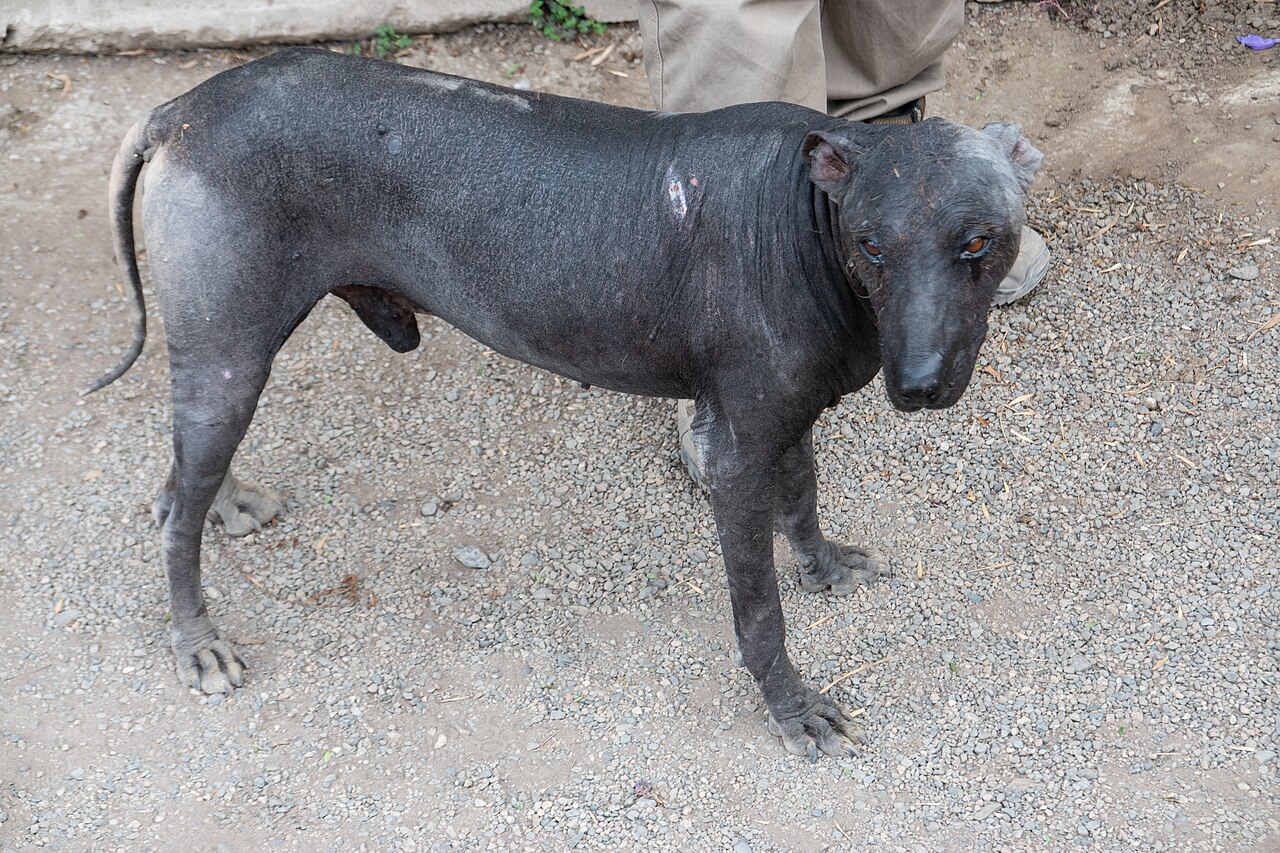
Archaeologists working at Castillo de Huarmey, a Wari Empire center about 190 miles north of Lima, have identified three dogs that match today’s Peruvian hairless breed. One was naturally mummified, its skin and ears still attached, with red cinnabar painted across the face.
The site was in use roughly between 600 and 1050 CE, centuries before the Inca. The team catalogued 341 dog bones belonging to at least 19 animals.
The hairless part came down to teeth. All three dogs were missing their first premolars, which had never erupted. The same gene that strips a dog’s coat also cuts its tooth count.
Radiocarbon dating put the mummified male at least 1,200 years old, the oldest date yet from the site.
Diet added another layer. Most of the dogs ate some maize, and the hairless puppies ate more of it than the others did, closer to what children at the site were eating. One puppy, six to eight weeks old, was buried with an elite craftsman the researchers nicknamed the Master Basketmaker. Only a few bones carried butchery marks, so dog meat was not a regular meal here. There were paw prints pressed into the adobe bricks as well.
What this means for your dog
The breed still exists as the Peruvian Inca Orchid. A dog without a coat needs different care: sunscreen on exposed skin, a sweater in cold weather, gentle baths, and a close eye on sunburn and irritation.
It also means the creature hogging your couch comes from a line that was eating from human hands, and sometimes resting in human graves, more than a thousand years ago. Dogs reached the Americas with people long before the Wari built their temples.