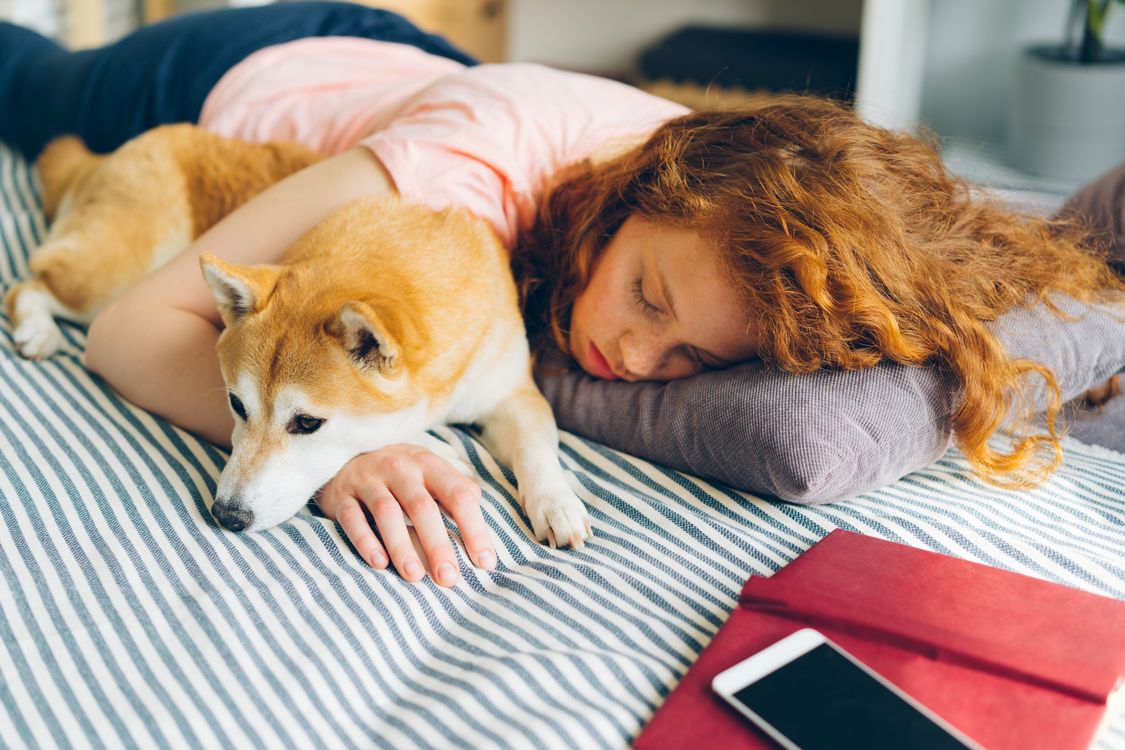
If you have ever blamed your dog for a rough night’s sleep, a new study suggests you may be letting yourself off the hook too easily. Researchers at the University of Toronto tracked 25 people and their 38 dogs for four weeks with activity monitors worn on the wrist and on the dogs’ collars. Sharing the bed, they found, did not meaningfully change how long or how well the humans slept.
The surprising part is who moved first. Nighttime activity between people and their dogs lined up closely, but more often than not the human stirred before the dog did. You may be waking your dog as much as your dog is waking you. Even owners who felt their dog disturbed their sleep did not show worse sleep on the monitors.
What this means for your dog
The study is small, and it had no dog-free control group, so treat it as reassurance rather than a rule. If your dog already sleeps on the bed and you both wake up rested, there is little reason to change a routine that is working. If you are the one tossing and turning, look at your own sleep habits first.

One thing worth watching: a dog who suddenly starts pacing or shifting at night may be uncomfortable rather than restless by choice. Our guide to why your dog is restless at night walks through the common causes, from room temperature to joint pain.
The full study summary is at Phys.org.