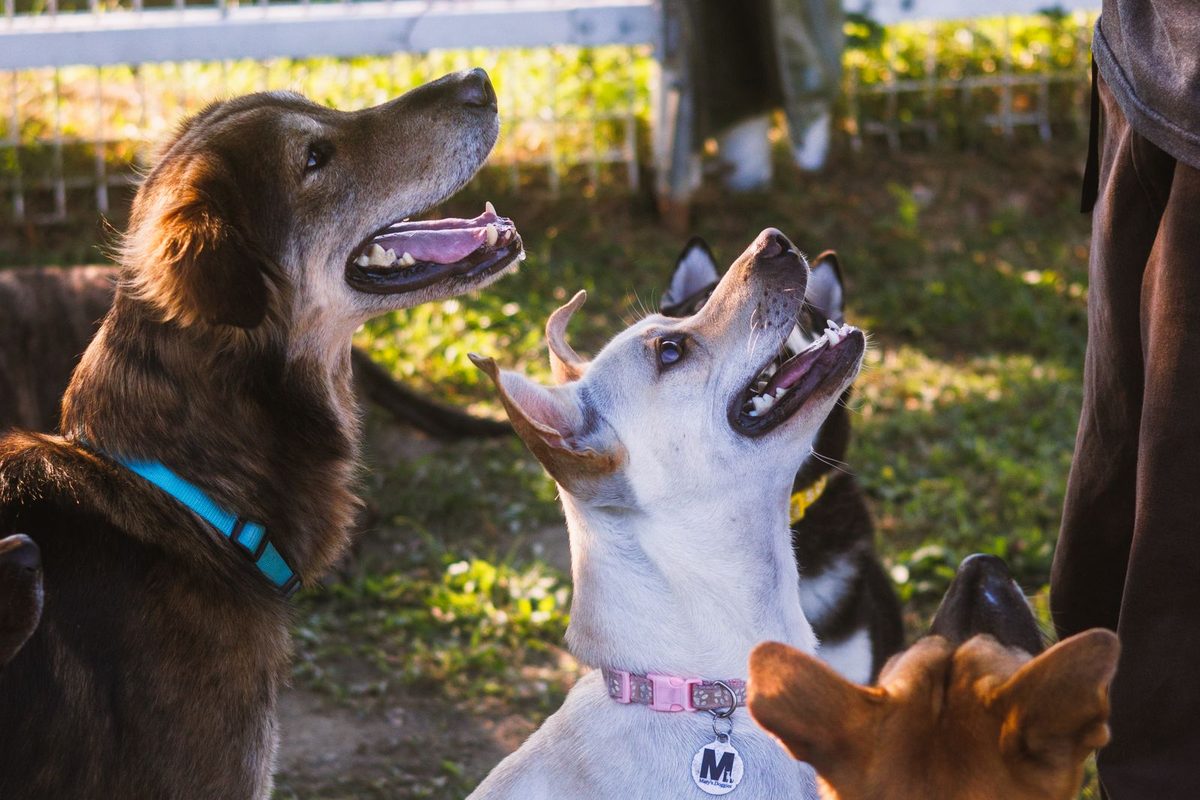
Your dog sits on the first ask in the kitchen. Comes when you call from the couch. Waits politely at the back door. Then you get to the park, say “sit,” and get a blank stare and a nose buried in the grass.
Nothing about your training broke. You took a cue into a place where it had never been taught.
Cues are not portable by default
Dogs do not generalize the way we assume. A behavior taught in the kitchen is, to the dog, a behavior that belongs to the kitchen. Zak George takes on this exact complaint in a short video about a dog who knows “sit” in the kitchen but not at the park: the dog is not being stubborn, they simply have not been taught that the word applies anywhere else.
The AKC’s trainer-written guide agrees. As their article on training tips puts it, “dogs don’t generalize well, so if you teach them to sit while you’re in the kitchen, they will think ‘sit’ only applies in that room.” The fix is to teach the behavior again in each new place, adding the three Ds (distance, duration, distraction) in small steps.
You are probably changing three things at once
Moving from the kitchen to the park changes three variables in one step:
- Location. Indoors to outdoors.
- Distance. Your dog was at your knee and is now at the end of a leash.
- Distraction. From nothing happening to squirrels, other dogs, and food smells.
Each adds difficulty on its own. Stacked together they can push a cue past the point where your dog can respond. Change one variable per session, the rule Zak George gives in the same video, and the cue stays reachable.
How to proof a cue, step by step
- Start where it already works. Five or six easy sits in the kitchen, paid generously, then stop while it is still going well.
- Change only the room. Same distance, same quiet, different floor. Living room, hallway, bathroom.
- Move to the doorway, then the front step. Quietest hour of the day, dog still right beside you.
- Add distance in a place your dog knows. Three steps back in the same room. If the cue holds, work up to ten.
- Add one small distraction indoors. A toy on the floor, a housemate walking past the doorway. Nothing louder yet.
- Go outside, at the easy end of outside. Your own driveway at a quiet hour, not a Saturday park with thirty dogs in it.
Use the two-out-of-three rule to decide when to move on. If your dog fails two of three attempts, the step was too big. Drop back a level and stay a few more sessions. Easy repetitions pay for the hard ones.
Pay more where the job is harder
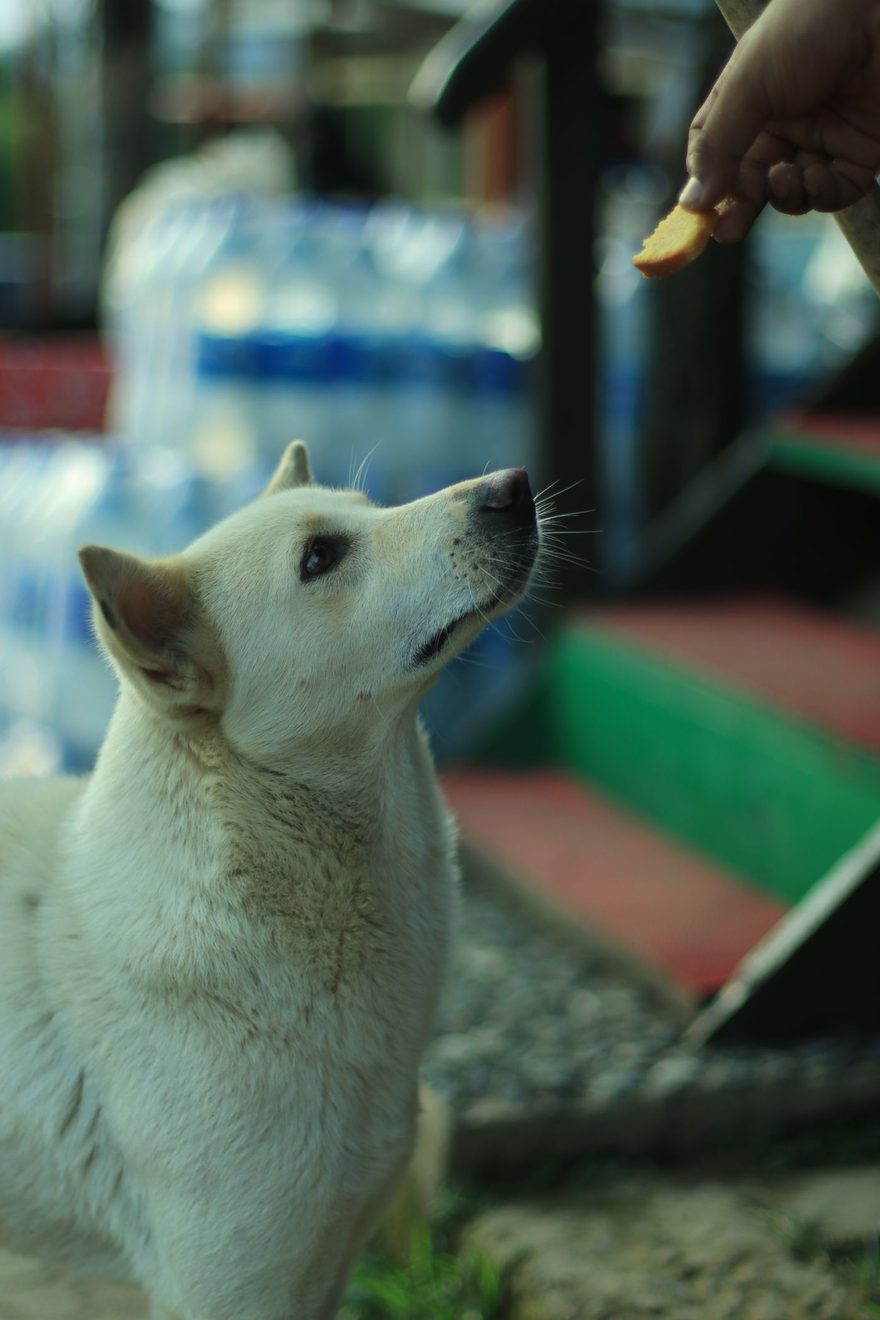
Kitchen food does not always work in a field of new smells. AKC’s guide to training around distractions puts it well: if sniffing a tree trunk is more rewarding than checking in with you, your dog will choose the tree every time. Their advice is to build a reward hierarchy, keep dry kibble for easy work at home, and bring out chicken, cheese, or a tug toy in distracting places. That is paying a higher rate for harder work.
What this means for your dog
Repeating a cue is the fastest way to wear it out. “Sit. Sit. SIT.” teaches your dog that the first two words carry no information and only the sharp third one counts. Ask once, wait three seconds, then help (lure, hand signal, a step closer) and pay for the help.
Failure outdoors is also rarely defiance. A dog scanning the horizon, pulling toward a smell, or staring at another dog is over the level where cues land. Asking louder does not raise the level. Starting somewhere easier does.
A realistic timeline
- New room, easy cue: one or two short sessions.
- Yard or driveway: about a week of five-minute practices.
- Park with other dogs visible: weeks, sometimes a couple of months.
Five minutes twice a day beats an hour every Sunday. If you are starting from nothing, our step-by-step guide to training at home covers the basics everything else builds on. If your walks look more like water skiing, give the leash its own loose leash plan and proof the other cues separately.
Common mistakes
- Rehearsing in the hardest place you can find, then calling it proof.
- Using everyday kibble in a place full of competing smells.
- Practicing in one room for months, then blaming the dog for not transferring the skill.
- Expecting a park-level “come” before the driveway version is solid.
When to call a trainer
If your dog cannot respond to a simple cue in a quiet room at home, that gap deserves eyes on it. The same goes if they freeze, shut down, or stop taking food in new places, or if the distraction involved is a dog or person that frightens them. Look for a force-free trainer with a recognized certification (CPDT-KA, KPA-CTP, or similar) and expect an assessment before any plan. Fear and aggression belong with a qualified behavior professional.
The cue was not broken. It was only ever taught in one room, and rooms do not come with you. Pick the next place and go easy on the first day.