
Researchers at Ohio State’s College of Veterinary Medicine ran lab tests on an experimental drug and it slowed the growth of both canine and human bone cancer cells. That is where the story stands. No dogs were treated, and the results have not been peer reviewed.
The drug, Telomir-Zn, was tested on three osteosarcoma cell lines grown in a dish: one human line and two canine lines. All three responded to similar low concentrations, according to the company behind it, Telomir Pharmaceuticals, which announced the findings with the university. Dr. Shay Bracha, a veterinary oncologist at the college, called osteosarcoma in large-breed dogs devastating with limited treatment options and said the consistent response across cell lines is worth following up. The company says it is discussing an in vivo study in dogs with naturally occurring tumors. It has not committed to one or set a timeline. Full report at dvm360.
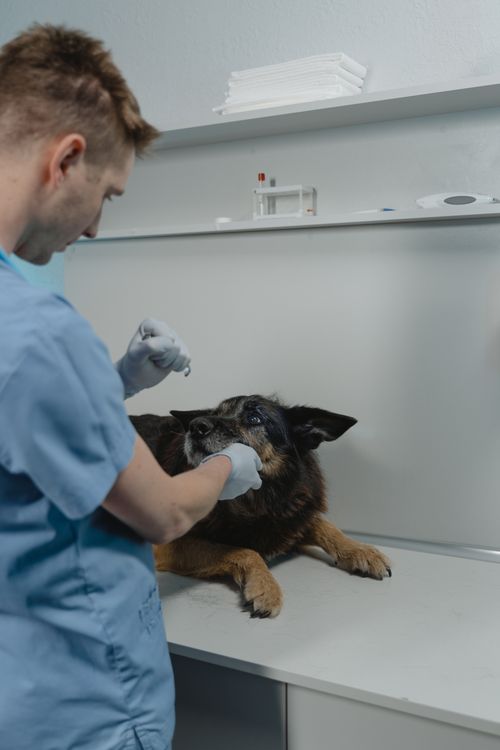
Why large-breed owners hear about this cancer most
Roughly 80 to 90 percent of primary bone tumors in large-breed dogs are osteosarcoma, which makes it the bone cancer vets talk about first. It is also the most common primary bone cancer in children and young adults. For human patients whose disease has spread, five-year survival still sits near 30 percent and has barely moved in decades. That is part of why dogs matter to this research. Their tumors resemble ours in genetics and behavior, and because dogs age faster, a study that would take decades in people can run in a few years. K9 Pie covered a similar route recently, with UC Davis enrolling dogs with glioma in two trials (how those trials work).
What to watch in your own dog
If you live with a big dog, know the early signs: a limp that does not ease with rest, swelling around a joint (often the shoulder or the knee), or a leg your dog stops putting weight on. Those earn a vet visit rather than a wait-and-see week. If a diagnosis ever comes back as bone cancer, ask about imaging and about clinical trials, since trials are often the fastest path to newer options. Nothing about your dog’s care changes because of this announcement. It is one more thread for researchers to pull on.