
You come home to a shredded couch cushion and a dog who greets you like nothing happened. It is almost never spite. Chewing is a normal biological instinct, the same way digging is for a terrier and herding is for a collie.
In puppies it is partly teething, and that part ends on its own. Most dogs have their adult teeth in by 7 months, says trainer Chris Loverseed of Positive K9 Training. A puppy who got good at finding things to chew at four months is a well-practiced chewer at eight.
After teething, the reasons fall into a few groups: boredom, chewing to settle the emotions, and separation anxiety. Bored dogs chew a variety of objects all over the house. Separation-related destruction looks different. Dr. Jamie Richardson of Small Door Veterinary says it clusters around exits: doors, doorframes, windowsills, anywhere a dog has tried to get out.
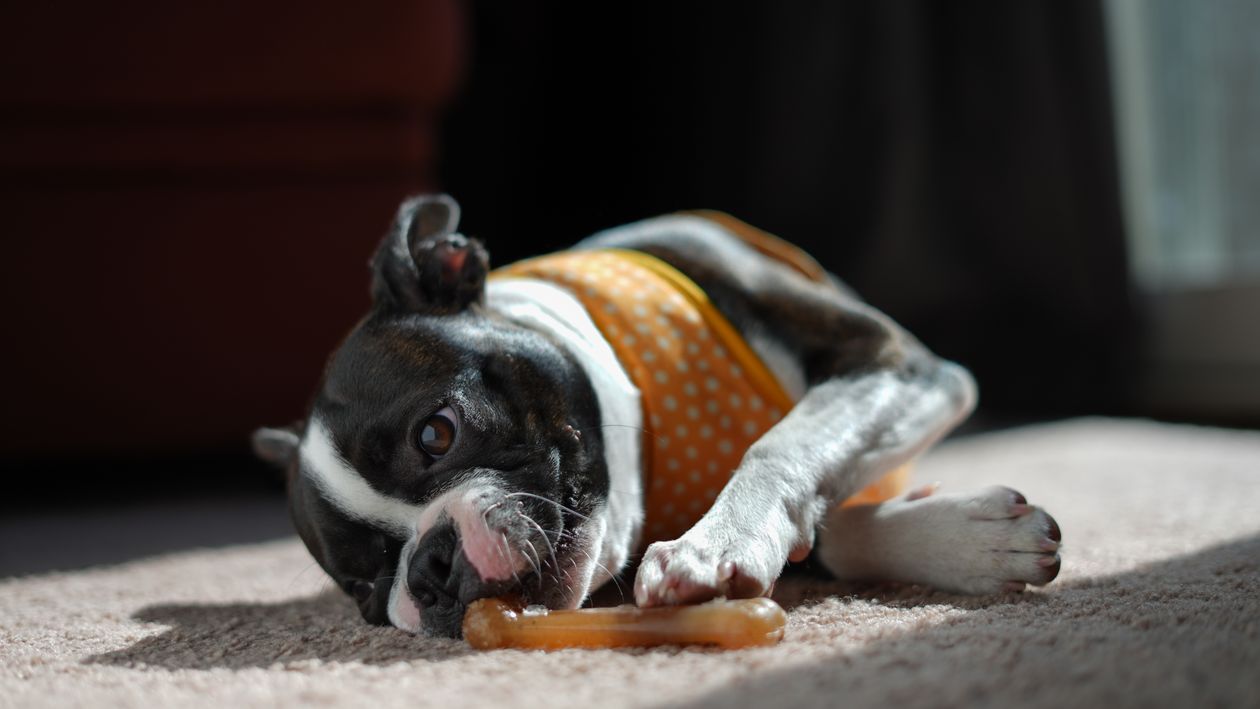
Loverseed says the quickest way to tell the two apart is a camera left running while you are gone. Some dogs chew for a while and fall asleep. Others pant, pace, or work at the door. That dog needs a different plan.
Appetite is another clue. Dr. Anna Larson, a veterinarian in Connecticut, watches whether a dog who normally loves a stuffed food toy will eat after the owner leaves. A dog too anxious to eat is not bored.
What this means for your dog: give the mouth a job before you leave, whether that is a frozen stuffed toy or a chew sized for your dog. If the damage targets doors and windows, or your dog will not eat while you are away, call your vet. Anxiety does not respond to punishment, so teach a replacement behavior instead.
The full expert interviews are at Whole Dog Journal.