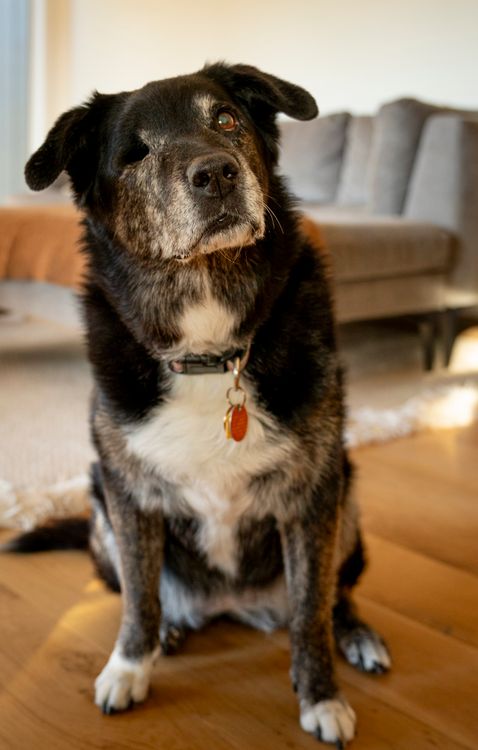
When an older dog starts leaving puddles by the back door, most owners assume a urinary tract infection. A new study from North Carolina State University suggests the answer may be upstairs instead.
Researchers followed 84 senior dogs, average age about 12 and a half, with checkups roughly every six months. Each visit included a urinalysis, an owner questionnaire, and a short battery of thinking tests. Of 268 visits, 231 had all three pieces.
Dogs with higher soiling scores did worse on the two tasks that measure executive function. One asked them to hold back an obvious response. The other asked them to walk around a barrier rather than into it. Those dogs were no more likely to have white blood cells, bacteria, or protein in their urine. Their urine was more dilute, which the authors treat as a separate age-related change rather than the cause.
What this means for your dog
If a senior starts having accidents, still get the urine checked. It may just not be the whole story. Ask your vet about the other signs of canine cognitive dysfunction: confusion in rooms the dog knows well, pacing or wandering at night, a cue the dog has known for years that suddenly stops working. Keep a simple log of when accidents happen, because this diagnosis leans on change over time.
K9 Pie has written about the 40-minute game test that can spot dementia years early and about the signs to watch for in your senior dog. Both are worth reading before the accidents start.
dvm360 has the write-up of the Journal of Veterinary Internal Medicine study.