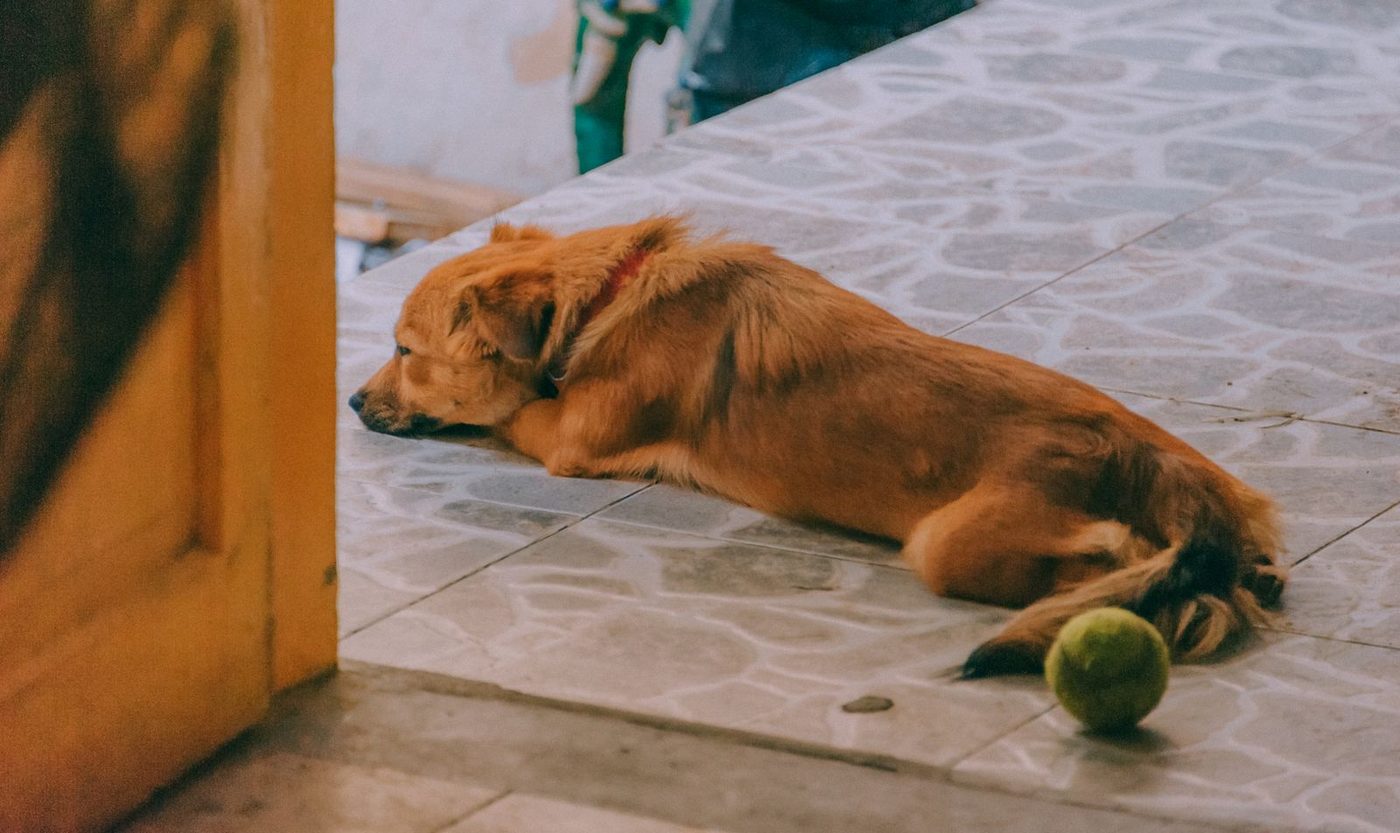
The first cold snap rearranges our evenings every year. Walks get shorter, the porch light comes on at six, and my dog starts patrolling the front window like she is expecting something. She is not wrong. Add delivery season and the first storm that rattles the windows, with trick-or-treaters waiting at the end of the month, and October asks a lot of a dog who would prefer the house stay boring.
So I end up in a pet store aisle holding a bottle called Calm Cloud wondering whether any of it works. Here is what has actually helped my nervous dog, what I wasted money on, and the free stuff that does most of the work.
What a stressed dog actually looks like
Stress in dogs runs on a spectrum from mild to extreme, and when it goes on long enough it wears down both health and behavior. That is the point Dr. Kate Mornement makes in a recent Whole Dog Journal piece: you cannot help what you cannot see, and most of us miss the early signals.
The early signals are small. Lip licking when there is no food around. Yawning in a room that is not warm. A tail tucked just slightly, a head turned away from whatever is bothering them, pacing between the door and the couch. If your dog suddenly refuses a treat they would normally counter-surf for, that is information.
Triggers are worth writing down for a week: thunder, fireworks, the groomer, the vet, being left alone, strangers at the door, car rides. I keep mine on a note in my phone. Once you know the list, half the plan writes itself.
The calming gear I would buy again
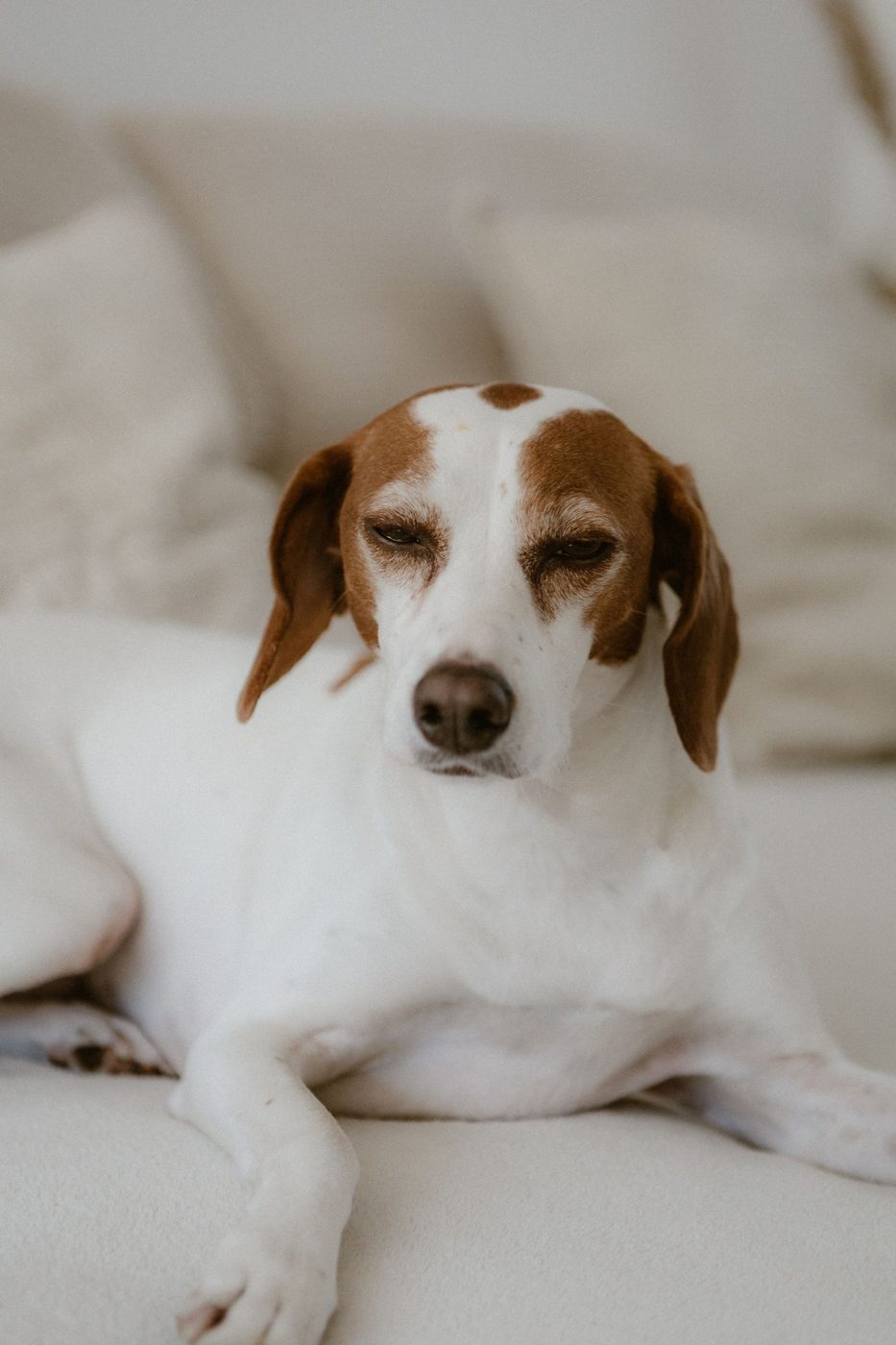
- A retreat that is genuinely dark. A covered crate, a bed in a corner behind the couch, an open closet with a blanket. Dogs like enclosed spaces because nothing can sneak up on them.
- Something to chew or lick. A stuffed, frozen chew toy gives a dog a job with their mouth. This one costs almost nothing and outperforms most things you can order.
- Background noise. A white noise machine, a fan, or classical music from a speaker. It muffles the doorbell and the thunder.
- A pressure wrap or anxiety vest. Constant, gentle pressure helps some dogs and does nothing for others. Borrow one or buy the cheapest version first, because you will not know until you try it on a Tuesday afternoon.
- A snood or a snug neck layer. Same lever as the vest, aimed at the neck, which is where a lot of dogs carry their tension. A cotton snood gives constant, gentle pressure and a little warmth, and unlike a vest it earns its keep as an ordinary winter layer on the dogs it does nothing for. Waggy Pups makes cotton snoodies in four neck sizes and about a dozen colors for $19. Fit by neck measurement rather than weight, the way you would fit a collar, and put it on during a quiet evening first, for the same reason as the vest.
- A baby gate for the front hall. Blocking the sightline to the door during trick-or-treat hours solves more of the problem than any product on this list.
What to skip, or at least slow down on
Calming products for dogs are a big business. Whole Dog Journal reports the category pulled in more than $18 billion in worldwide sales in 2025, and the same article makes a point worth repeating: how well any of these products works depends heavily on the individual dog.
Which is a polite way of saying a lot of it is a coin flip. A supplement will not fix a training gap, and anything with a real sedative effect belongs in a conversation with your vet. If your dog’s fear escalates into panic or escape attempts, talk to your vet. Medication is a legitimate option, not a last resort.
One myth worth dropping: you cannot reinforce fear by comforting your dog. You can, however, teach them that attention only shows up once they are already trembling. Reward the calm moments, the ones where nothing is happening, instead of waiting for the storm.
Practise on the boring days
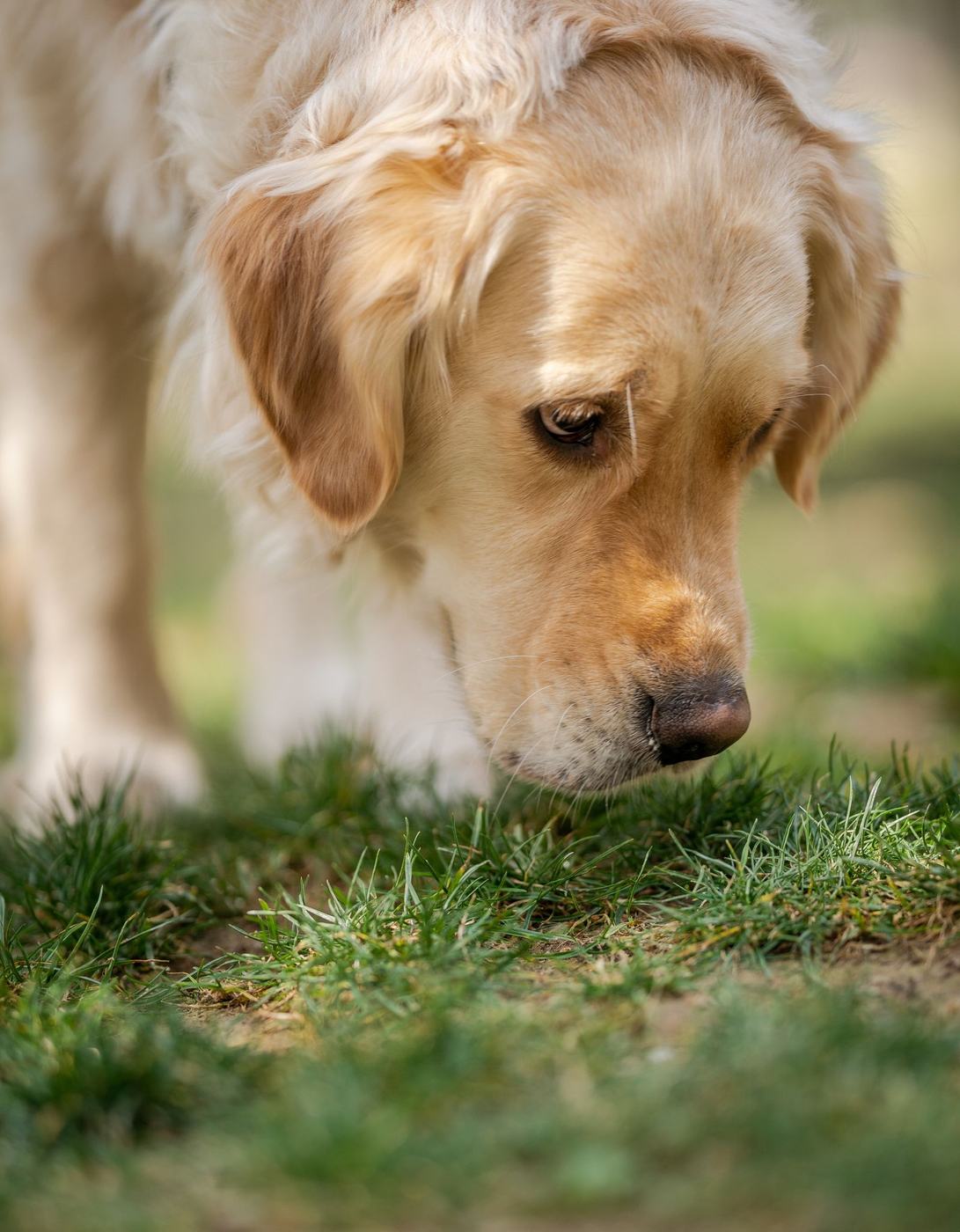
Gear your dog only sees during scary events becomes a warning sign. If the vest appears right before thunder, the vest predicts thunder. The fix is dull repetition: put it on during a normal evening, play calming music while you eat dinner, run a doorbell practice round when nobody is at the door.
For the doorbell, keep it short. Ring it, toss a treat, repeat five times, then quit while your dog is still winning. That is a two-minute job you can run twice a week, and it lands better after a slow, sniff-heavy walk than after a rushed lap around the block.
A five-step plan for the noisy evenings ahead
- Pick the retreat spot this week, before the first storm, and make it a place your dog already likes.
- Add sound cover: white noise, a fan, or music, with curtains closed before the thunder starts.
- Freeze two stuffed chew toys so one is always ready.
- Switch the doorbell to a silent phone notification during trick-or-treat hours, and park a gate or an exercise pen in the hallway. If decorations are already spooking your dog, that needs its own slow introduction.
- Practise calm twice a week on quiet days, not only when something is exploding outside.
One last detail that surprised me: during a storm, leaving the crate door open matters. A panicking dog who tries to escape a closed crate can hurt themselves. The crate should be a place they can choose, not a place they are locked into while the sky is loud.
None of this is exciting, and most of it is free. The bottle called Calm Cloud is still on the shelf. My dog is asleep on the couch with her chin on a frozen chew toy, which is, as far as I can tell, the entire goal.